Context: the official narrative
NGOs monitoring global media landscapes describe an alarming drop in press freedom. Reports point to journalists harassed online, laws tightened against free reporting, and governments citing “national security” to muzzle dissent. The Guardian and other outlets frame the crisis as a statistical anomaly: the “worst decline in five decades.” Numbers are stacked—51 countries using hate rhetoric during elections, countless others weaponizing disinformation.
International advocacy groups respond with ritual statements. They call for “renewed commitments” and “collective safeguarding.” But commitments mean little when regimes harden censorship laws while smiling on the global stage. The official narrative reduces the collapse to a technical measurement, not the human suffocation it truly is.
Oppositional Argument: why the mainstream softens the blow
Here lies the rot: calling it a “decline” underplays its brutality. Press freedom is not simply slipping. It is being strangled. Politicians vilify minorities to normalize censorship. Authoritarian leaders learn from each other, borrowing tactics, exporting repression.
Mainstream framing avoids naming the culprits—Russia, Hungary, Turkey, India—preferring neutral generalities. Yet neutrality protects the oppressors. By refusing to confront authoritarianism directly, media institutions become complicit. The phrase “sharpest drop in 50 years” may sound alarming, but without naming the knives at journalists’ throats, it is empty.
Analytical Breakdown: causes and consequences
This crisis has roots. Disinformation did not appear overnight—it was nurtured by states and amplified by corporations. Platforms like Facebook and X profit from outrage while refusing responsibility. Governments exploit the chaos, passing “fake news” laws that criminalize inconvenient reporting.
History shows this playbook is familiar. In the 1930s, regimes weaponized propaganda and censorship to pave the way for authoritarian control. Today, we watch the same mechanism: delegitimize the press, amplify lies, silence critics, then call it democracy.
The consequence is measurable: journalists jailed, newspapers shuttered, public trust eroded. A society deprived of free press cannot defend its rights. It cannot expose corruption. It cannot resist lies. Silence is not stability; it is submission.
Human Perspective: the cost of silence
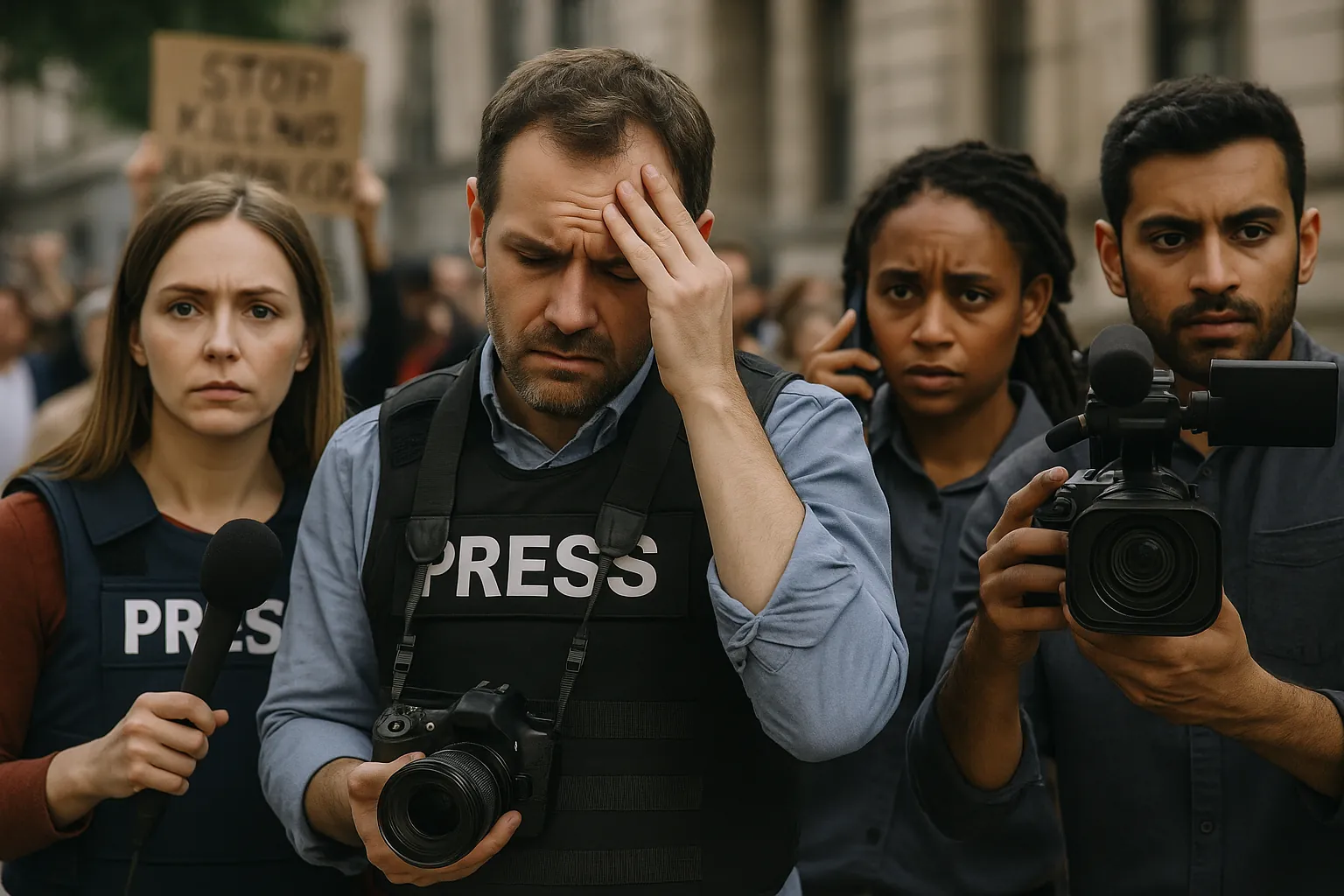
Consider the journalist in Moscow, dragged into court for reporting on war crimes. The reporter in Istanbul, accused of “terrorism” for criticizing government policy. Or the LGBTQ+ journalist in Africa, attacked by politicians’ words that paint them as enemies of the nation.
These are not abstract data points. They are human lives, careers destroyed, families threatened. Each silenced voice leaves a vacuum filled with propaganda. Citizens absorb one narrative: the state’s. And the world shrinks into silence.
Counterarguments
Some argue that restrictions are necessary in an era of rampant misinformation. They claim disinformation is so corrosive that governments must act. But who defines “misinformation”? In authoritarian hands, the answer is clear: anything critical of power.
Others suggest that technology will balance the scales—that independent voices can thrive online. Yet those platforms are the very battlegrounds being captured, their algorithms manipulated, their content censored under government pressure. The fantasy of digital salvation ignores the reality of digital repression.
Conclusion: stop treating freedom as optional
Press freedom decline is not a statistic to cite. It is a collapse of democracy itself. Every jailed reporter is a warning shot. Every shuttered newsroom is a nail in the coffin of accountability.
The world cannot stay silent. International institutions must stop issuing toothless statements and start sanctioning regimes that strangle the press. Civil society must reject the normalization of hate campaigns. Citizens must defend journalists as fiercely as they defend their own rights.
Silence is surrender. And surrender is exactly what authoritarianism demands.