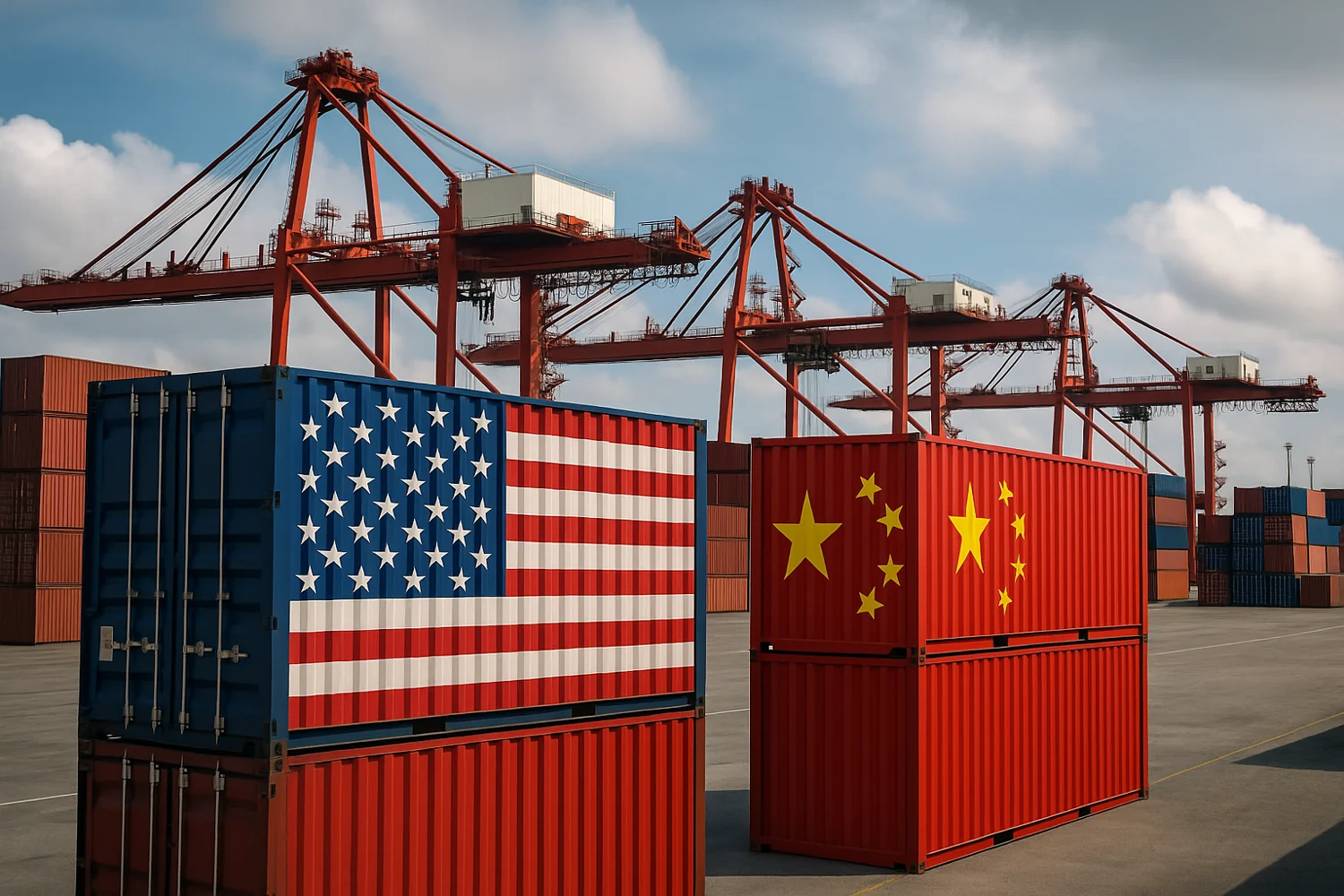
Beijing has responded — not with negotiation, not with compromise, but with a hammer. Hours after Washington confirmed its “reciprocal” tariff plan, China announced 34% duties on every single U.S. import, effective December 10. The move mirrors Trump’s December 1 tariffs almost percentage for percentage, item for item. It is the most sweeping retaliation in the history of U.S.–China trade, a signal that Beijing is done playing defense and is willing to escalate the conflict as far as Washington pushes it.
This is not just another trade dispute. The China US tariffs 2025 showdown marks the collapse of the fragile economic détente that survived both the COVID era and the first trade war. What we are witnessing now is a structural rupture — a divorce between the world’s two largest economies, carried out through tax codes, shipping invoices, and weaponized supply chains.
And the timing is no coincidence. Trump wants leverage ahead of negotiations. China wants to prove it cannot be coerced. Both sides believe they can withstand more pain than the other. The rest of the world will pay for that belief.
Beijing’s Response Wasn’t Just Fast — It Was Calculated
China’s Ministry of Commerce didn’t wait for quiet diplomacy. It released the retaliation measures publicly, bluntly, and with unmistakable symbolism. Tariffs will range from 15% to 34%, hitting American agriculture, machinery, aviation parts, LNG, electronics, cars — everything.
The message:
If the U.S. makes trade a weapon, China will respond with symmetry and scale.
The China US tariffs 2025 retaliatory structure mirrors Trump’s tariff categories almost line-by-line. In 2018, Beijing was more selective, attempting to avoid self-harm. Not this time. China is signaling that the strategic goal is not merely to respond, but to reshape global trade away from dependence on the United States.
Trump’s Strategy: Leverage or Liability?
Trump’s December 1 tariffs were framed as “reciprocal rates” — a return to the economic nationalism of his first term, amplified by a domestic narrative of punishment and resurgence. But this moment is different. The U.S. economy is more fragile than Washington admits. Supply chains have diversified but not recovered. Manufacturing is unstable. Farmers remain dependent on export subsidies.
Trump calculated that Beijing would protest loudly but retaliate modestly. Instead, China responded with a full-spectrum tariff salvo.
The gamble:
Trump believes the U.S. can withstand the pain longer than China can.
The reality:
Both economies are exposed — but differently.
The Silent Victims: American Consumers
Politicians talk about tariffs as if they’re exotic weapons aimed at foreign capitals. But tariffs never hit governments — they hit consumers.
A 34% tariff on U.S. goods entering China means:
- U.S. agricultural exports become instantly uncompetitive.
- American industrial exports lose market share to Europe and Southeast Asia.
- U.S. tech hardware faces new costs in an already shrinking global footprint.
For households, the pain will be indirect but sharp: layoffs in manufacturing hubs, reduced farm incomes, and higher prices on goods that rely on Chinese components.
The China US tariffs 2025 crisis is not an abstract macroeconomic chessboard. It’s a direct tax on middle-class Americans disguised as geopolitical strategy.
Why China Can Afford to Retaliate This Time
In 2018–2019, China’s retaliation had limits. Its import mix was vulnerable, supply chains were overly dependent on U.S. technology, and domestic consumption was weaker.
In 2025, the picture is different:
- China’s agricultural import partners now include Brazil, Argentina, Russia, and Southeast Asia.
- Semiconductors have become partially domestic after aggressive industrial policy.
- Belt and Road markets absorb more Chinese output.
- Domestic consumption has been repositioned as the main economic engine.
This time, China can hit back without fear of destabilizing key industries. Beijing understands that Trump’s strategy depends on Chinese restraint. By refusing to restrain itself, China undermines the foundation of the entire U.S. negotiating posture.
Europe and Global Markets Are Pulled Into the Crossfire
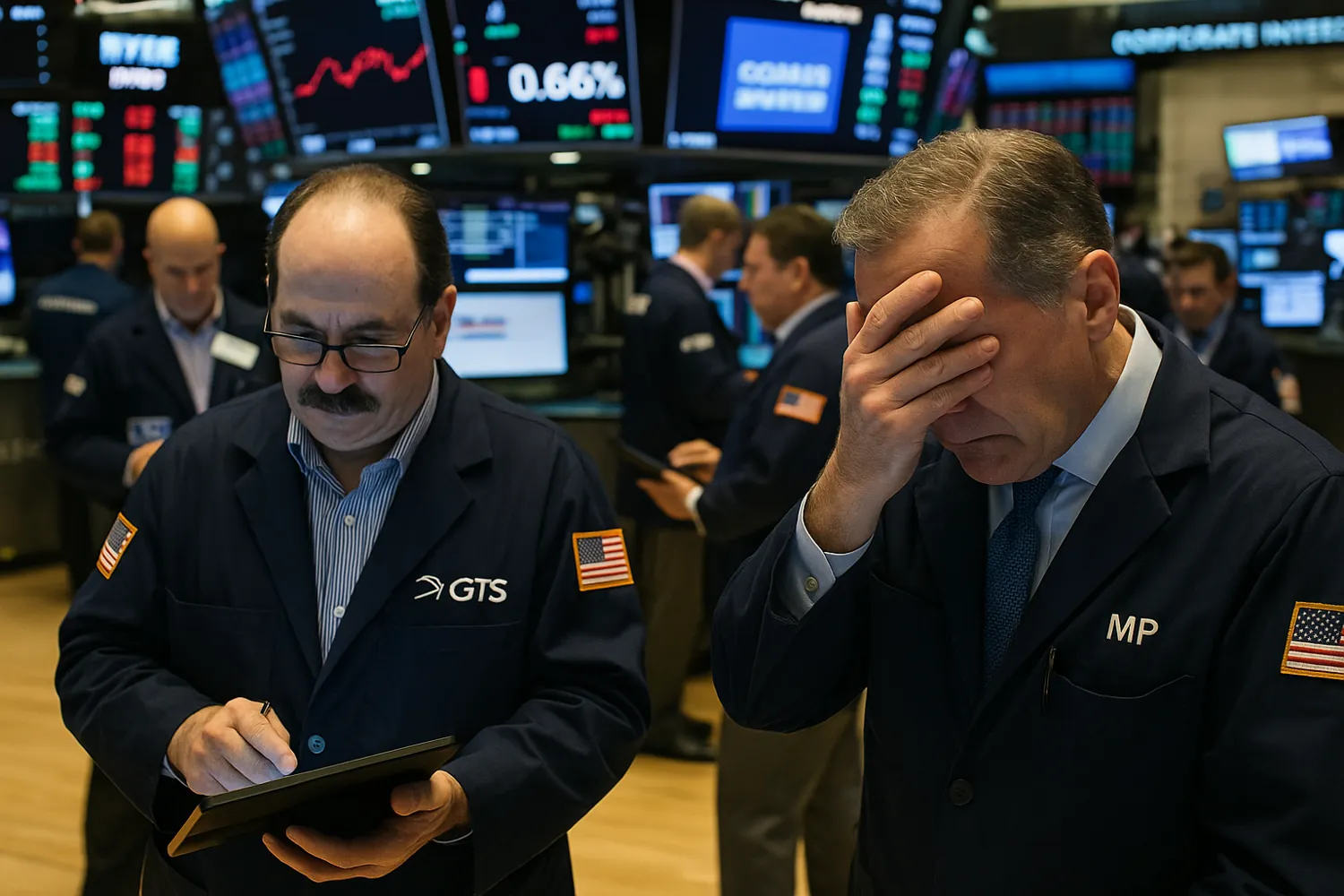
Markets reacted instantly. Futures dipped. Commodity volatility spiked. Logistics companies began warning of delays as orders froze on both sides. Europe, caught between its largest market (China) and its most powerful ally (the U.S.), now faces the worst scenario: retaliation chains that engulf the entire global supply network.
Germany’s industrial exporters will benefit from China’s tariffs on U.S. machinery — temporarily. But higher input costs will hit European producers when U.S. tariffs on China raise global prices on steel, copper, electronics, and chemicals.
The China US tariffs 2025 shock is global, not bilateral.
The Political Theatre Behind the Tariffs
Trump sees tariffs as spectacle — a demonstration of strength, a form of negotiation through intimidation. China approaches tariffs as strategy — methodical, data-driven, calibrated.
The contrast reveals the deeper truth:
Trump views tariffs as a tool of political narrative.
China views tariffs as a tool of geopolitical restructuring.
And in a long-term contest, strategy always beats spectacle.
U.S. Agriculture Faces Immediate Disaster
Farm states were already struggling with reduced exports and climate-driven volatility. China is their single most important foreign buyer. A 34% tariff makes U.S. soybeans, corn, pork, wheat, and beef commercially dead on arrival.
Farm income will collapse unless Washington restarts massive subsidy programs. But in 2025, budget constraints are real. Trump cannot afford a repeat of the $28 billion bailout of the previous trade war — not without consequences for the fiscal outlook and Treasury markets.
Corporate America Is Forced to Choose Sides
U.S. multinationals have spent a decade diversifying “away from China,” but the truth is less comfortable: no market replaces 1.4 billion consumers.
Technology companies reliant on Chinese assembly, pharmaceutical firms relying on active ingredients, and automakers sourcing batteries from Asia now face a hard deadline: tariffs on December 10 or operational chaos.
The China US tariffs 2025 conflict forces corporations into a corner. They must either:
- move production out of China,
- absorb losses,
- pass costs to consumers,
- or pressure Washington to back down.
Boardrooms across America will quietly choose the last option.
Beijing Is Playing a Longer Game
China does not need to “win” the trade war today. It needs to survive it long enough to accelerate structural independence — technological, agricultural, industrial.
Trump’s tariffs inadvertently serve Beijing’s long-term goals:
- justify greater state investment
- promote domestic innovation
- shift supply chains southward
- weaken U.S. influence in Asia
- build alternative trade blocs
Tariffs are not merely a reaction — they’re a catalyst.
The World No Longer Has a Trade Superpower
The 1990s system — U.S. dominance, WTO discipline, global rules — is collapsed. In 2025, the world has no trade superpower, only trade factions.
The China US tariffs 2025 moment is proof of that. Two giants lashing out, neither willing to concede, neither able to dominate. The result is fragmentation.
And fragmentation is expensive.
Who Bends First?
Trump depends on tariffs for political narrative. China depends on retaliation for geopolitical credibility. Neither can blink.
That’s why the December deadlines matter. It’s not about percentages — it’s about political humiliation. If either side delays implementation, it will be seen as surrender.
And 2025 is an era where appearance matters more than outcomes.
The Judgment
The U.S.–China economic relationship has entered irreversible deterioration. Trump’s escalation and China’s retaliation represent a shift from competitive interdependence to strategic disengagement.
Beijing’s 34% tariff strike exposes the limits of Trump’s economic nationalism: the belief that America can coerce without cost, dictate without consequence, and weaponize trade without suffering blowback.
Reality is harsher. Tariffs are a tax. Retaliation is inflation. And economic war is not a demonstration of power — it’s an admission of weakness.
History will judge the China US tariffs 2025 standoff as the moment both superpowers decided pain was preferable to compromise.
And the world is now trapped between them.