
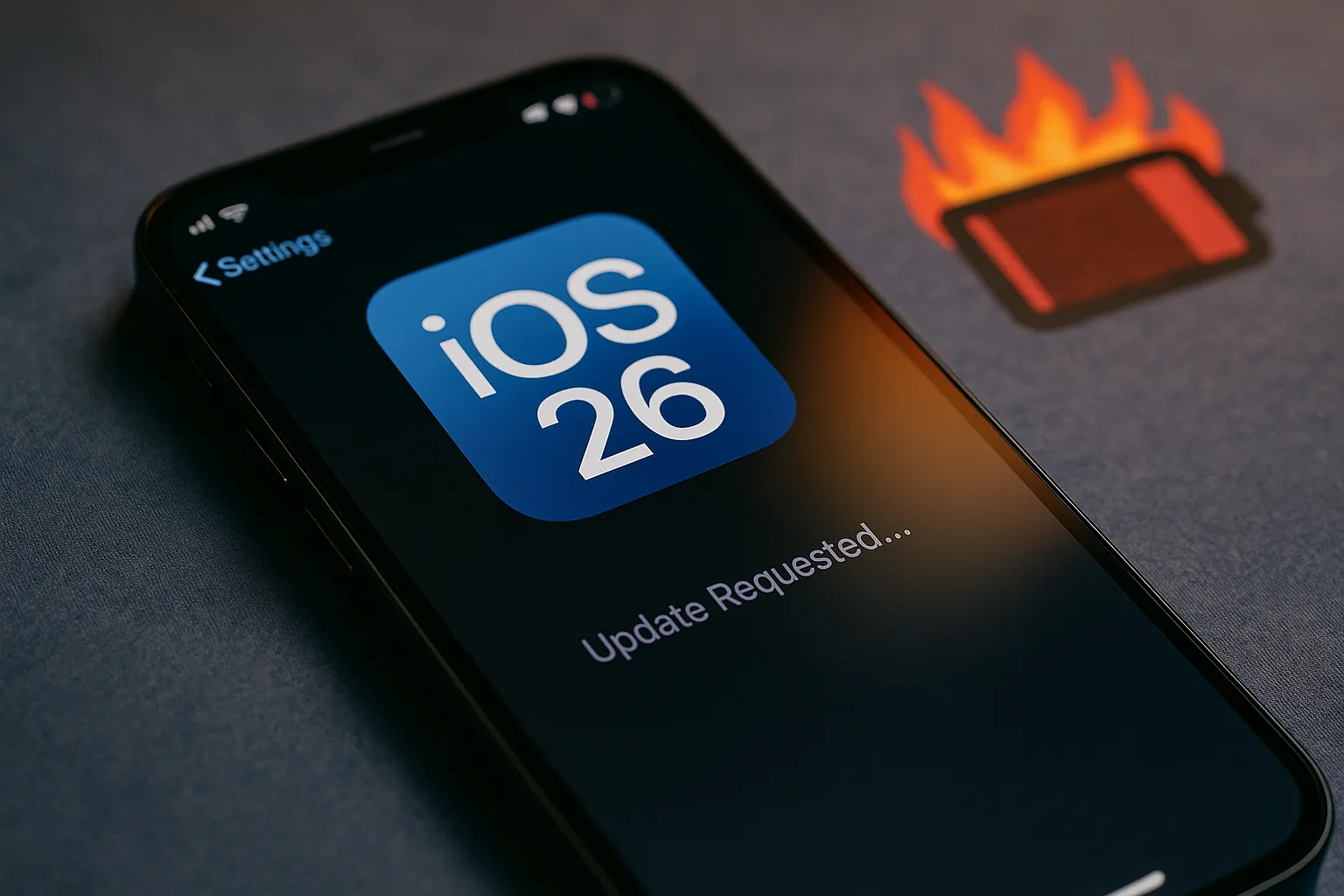
Apple’s iOS 26 update is proving more toxic than transformative. The focus keyphrase “iOS 26 update” now carries dread for millions of iPhone owners. Instead of innovation, the rollout delivered overheating, lag, and draining batteries. Apple rushed out iOS 26.0.1 as a patch. But critics ask: why was the disaster allowed to hit users at all?
Context: Apple’s glossy promise vs harsh reality
Apple framed the iOS 26 update as a leap forward — smarter AI integration, faster multitasking, and tighter security. Released on September 16, 2025, the update was meant to extend the iPhone’s dominance at a time of slowing global sales. The official press materials read like a victory lap. Yet within 48 hours, social media filled with angry posts. Hashtags like #iOS26Fail trended worldwide. Users complained of battery meltdown, unexpected app crashes, and unresponsive screens.
Oppositional Argument: Innovation as negligence
Apple’s loyalists defend the company, claiming all big updates have “teething issues.” That argument doesn’t hold. The iOS 26 update was not a small bug — it was systemic. Reports of iPhones overheating in pockets, draining 40% of battery in an hour, and freezing during basic tasks are not minor hiccups. They are evidence of negligence. Apple’s obsession with annual spectacle launches has overshadowed its duty to test software properly.
Analytical Breakdown: The cost of speed over quality
Why did this happen? Apple’s pipeline has become a prisoner of its own calendar. September must mean new iPhones and new iOS, whether the code is ready or not. Analysts point to Apple’s declining sales in China and rising competition from Samsung and Xiaomi. In that context, iOS 26 update was rushed to signal strength. But the side effect is reputational damage. Each overheating iPhone chips away at Apple’s image of perfection. Even the emergency release of iOS 26.0.1 failed to fix all the bugs, proving that the update was fundamentally flawed.
Human Perspective: iPhones as liabilities
Ordinary users feel betrayed. Students report their phones dying during lectures. Business professionals saw apps crash in meetings. One viral post described an iPhone heating up so badly it left scorch marks on a wooden desk. For many, the iPhone is not just a gadget but a lifeline. When the iOS 26 update turned those lifelines into liabilities, frustration turned into fury. AppleCare centers reportedly faced surges in complaints, with long queues reminiscent of product launches — except this time, nobody was celebrating.
Counterarguments
Apple’s defenders say rapid patches prove responsiveness. Critics answer: patches shouldn’t be damage control; they should be polish. Others argue that “every software has bugs.” True, but few companies charge a premium for perfection like Apple does. A $1,200 phone should not become unreliable overnight because Cupertino decided to stick to its September show.
Conclusion: A turning point in Apple’s narrative
The iOS 26 update exposes Apple’s growing arrogance. It no longer innovates at the user’s pace but at Wall Street’s. The quick patch does not erase the fact that Apple pushed unstable code onto millions. The company must choose: slow down and respect its users, or continue treating them as beta testers in a never-ending cycle of hype. If this is Apple’s vision of the future, it’s not one consumers signed up for.