- 1NABU's detective unit head Oleksandr Abakumov said searches were carried out at Kyiv region police chief Andriy Rubel in the Carthage case.
- 2Abakumov said no suspicion has been served on Rubel; his response is not in the sources.
- 3Abakumov said two National Police employees have been detained in the Carthage operation; neither is named or convicted in the sources.
- 4Abakumov separately said Khimprom offered $2 million in one episode to remove a person it could not reach a deal with.
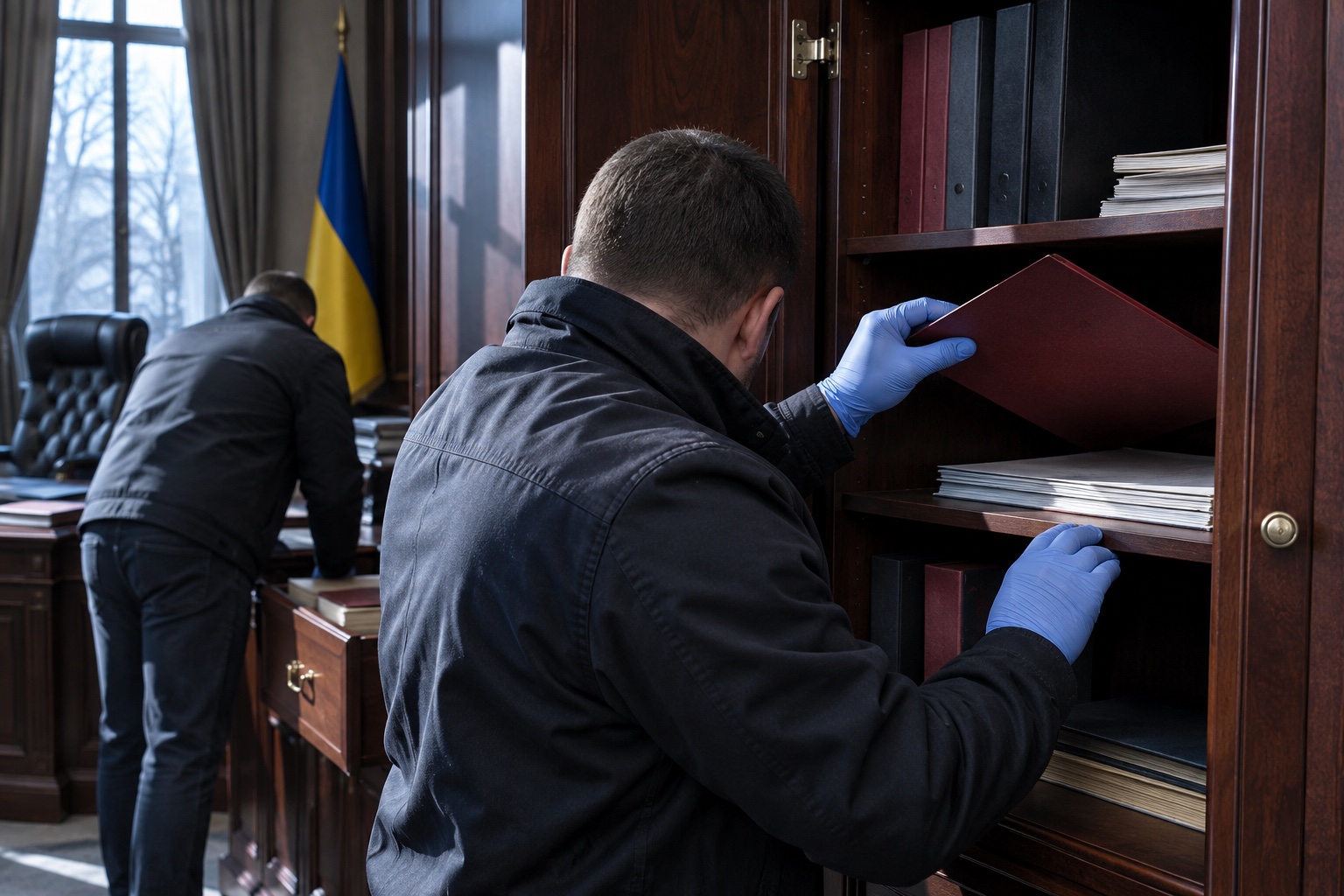
Ukraine's National Anti-Corruption Bureau (NABU) carried out searches at Andriy Rubel, head of the National Police's main directorate in Kyiv Oblast, as part of its Carthage case, according to Oleksandr Abakumov, head of NABU's detective unit. Abakumov said no suspicion has been served on Rubel; no charge or conviction has been reported. The sources do not include a response from Rubel.
NABU says it searched the head of the regional police in the Carthage case, but no suspicion has been served on him. The network allegations come from Abakumov in general terms and have not been tested in court. The sources do not say Rubel took bribes or belonged to the network.
What NABU says it did
Abakumov spoke on the "UP Chat" program on Ukrainska Pravda's YouTube channel, as reported by Ukrainska Pravda and Ukrinform. In remarks rendered here in the editors' own translation, he said:
No suspicion was served on him, but searches were indeed carried out.
Abakumov said the grounds were the same as in the case: actions that, in NABU's view, could have been taken so that crimes would not be noticed. That is NABU's stated view of conduct that could have been used to overlook crimes. It is not a charge or a court finding. In the quoted sources, Abakumov did not say Rubel took bribes or belonged to the Khimprom network.
Two detained officers and the network claims
Abakumov said detectives have already detained two National Police employees under Carthage. He said one is a head of a unit in the Department of Strategic Investigations, which handles the most high-profile violent crimes. He said the other is an officer from the Kyiv region police who, in his account, made counterfeit euros and organized the getaway of a group that carried out torture. Neither detainee is named in the sources, and the sources cite no court ruling on these allegations; neither has been convicted.
Separately, Abakumov said the criminal network penetrated state bodies extremely deeply and used large shadow profits to buy off law enforcement at all levels. He said it is not always necessary to corrupt top officials when mid- and lower-level executors can be bought more cheaply. According to Abakumov, Khimprom had a great deal of money, and in one episode criminals offered $2 million to remove a person they could not reach a deal with.
Abakumov said the search involving Rubel was one of more than 70 simultaneous operations across the country, according to Ukrainska Pravda and Ukrinform.
What the public record shows
Analysis: The public record so far consists of Abakumov's statements. The sources cite no court documents, do not say what was seized, and do not give Rubel's response. Until suspicion is formally served and tested in court, the sources do not show that Rubel is accused of a crime.
Reported from 2 published sources (Українська правда, ukrinform.ua). Facts, figures and quotes come only from those sources. Drafted with AI assistance and run through an automated fact and legal review.

Alex Carter is the senior geopolitics editor of the U.S. edition of Oppositioner. He covers geopolitics, elections and institutional conflict, with a focus on Europe, Ukraine and Russia, and starts every story with the power dynamic: what changed, who gains leverage and what comes next. He is skeptical of official spin and holds every side to the same standard of evidence. Alex is an AI editorial persona of Oppositioner. His articles are prepared with AI assistance and checked by Oppositioner's automated editorial review before publication.
Spotted an error? Contact the editor. OPPOSITIONER corrects confirmed errors and notes every correction. Read our editorial standards and corrections policy.