
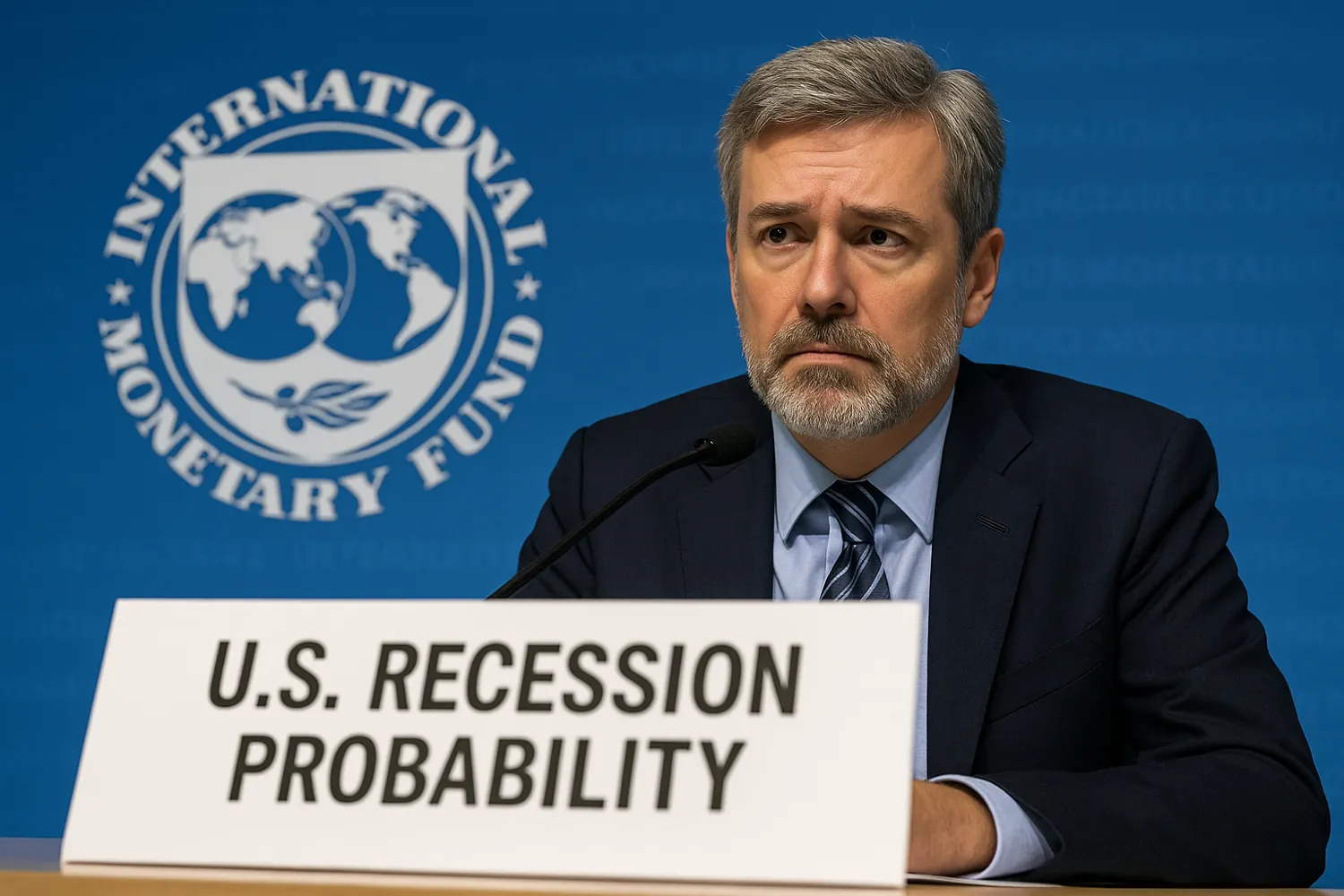
Context: IMF’s alarm and the global backdrop
The IMF’s update arrived with an unspoken message — confidence in US economic resilience is eroding. Global growth remains pegged at 3.3%, but much of that momentum now comes from India, the Middle East, and Africa. America’s once unchallenged dominance is faltering under its own trade barricades.
The Fund’s analysts cite “policy-induced uncertainty” as a critical drag. Tariffs imposed on Chinese and European goods, combined with retaliatory duties, have already squeezed supply chains and consumer prices. Corporate investment is cooling, the dollar remains volatile, and Treasury yields reflect growing unease. Even the World Economic Forum noted that “the US fiscal stance has become a source of risk rather than stability.”
Oppositional Argument: the illusion of strength
The Trump administration’s defenders claim tariffs “rebuild American industry.” But this mantra overlooks the silent collapse beneath the surface. Manufacturing output has stalled for two consecutive quarters. Job creation in core industrial states like Michigan and Ohio has slowed to a crawl.
The US recession probability is not just a forecast — it’s a reflection of lost credibility. Investors sense it. The IMF rarely revises upward recession odds unless systemic vulnerabilities appear. This time, it points directly to Washington’s own policy design.
Trump’s economic strategy, once hailed as protectionist patriotism, now looks dangerously close to fiscal self-harm. Slashing corporate taxes while raising import costs creates the worst of both worlds: swelling deficits without productive investment. America’s economy, in essence, is eating its seed corn.
Analytical Breakdown: how tariffs and deficits collide
History offers a grim precedent. The Smoot-Hawley tariffs of the 1930s triggered retaliation that deepened the Great Depression. Though today’s global system is more complex, the principle remains: when major economies weaponize trade, everyone loses — especially the initiator.
The IMF’s 40% estimate is not a mere guess. It’s derived from models tracking inflation volatility, consumer confidence, and yield-curve inversions. Current data reveal warning signs:
- Real wage growth has stagnated despite lower unemployment.
- Corporate profits have flattened amid rising input costs.
- Capital inflows are shifting toward Asia and the EU.
In short, America is no longer the magnet for investment it once was. A recent Oppositioner analysis on Wall Street’s record highs noted that speculative euphoria masks structural weakness — precisely the condition the IMF is now quantifying.
Counterarguments
White House officials dismiss the IMF’s view as “overly pessimistic” and “politically motivated.” They argue that tariffs are temporary leverage, meant to force fairer trade. Yet even conservative think tanks like the Cato Institute admit that such policies often backfire, eroding domestic competitiveness.
Meanwhile, business leaders whisper what politicians won’t say aloud: uncertainty kills investment. Capital does not wait for ideology to stabilize.
Human Perspective: the ground reality
For ordinary Americans, macroeconomics isn’t an abstract debate — it’s the price of eggs, rent, and medical bills. Farmers hit by Chinese retaliation see exports halved. Small manufacturers face higher costs for imported components. Trucking companies report thinner margins as diesel prices rise.
An Iowa steelworker told Reuters last month: “They said tariffs would bring jobs back. What we got are layoffs and empty orders.” This sentiment now echoes across the Rust Belt, where economic nationalism once promised revival.
The US recession probability isn’t just statistical; it’s psychological. Consumer sentiment, often a leading indicator, has dipped to a two-year low. Confidence, once the hallmark of the Trump economy, is fading into caution.
Oppositional Argument: fiscal populism meets reality
The administration’s fiscal populism — cutting taxes, boosting defense spending, and pressuring the Fed to lower rates — fuels short-term growth but deepens long-term fragility. The US debt-to-GDP ratio is nearing 130%, rivaling wartime levels.
The irony? The same policymakers warning against “socialist overspending” have embraced deficit-driven populism. Investors know how this story ends: with inflationary pressure, higher borrowing costs, and eventual contraction.
The IMF’s projection, though cautious, essentially tells Washington that the world no longer buys its narrative of unstoppable resilience.
Analytical Breakdown: divergent global paths
Emerging markets like India and Indonesia continue expanding above 5%, while the eurozone struggles near 1%. Yet even among developing nations, investors increasingly hedge against US volatility. The dollar’s strength, paradoxically, worsens global debt burdens while inflating America’s own import prices.
Trade tensions also expose the hypocrisy of “America First.” The US relies heavily on global supply chains — from microchips in Taiwan to machinery in Germany. Tariff escalation simply drives inflation back home, not manufacturing revival.
Recent Oppositioner reporting on global trade instability noted how protectionism spreads like contagion: once one major power imposes barriers, others retaliate in kind. The IMF’s warning is thus both economic and geopolitical — a plea for sanity before nationalism becomes self-defeat.
Counterarguments
Some argue that short-term pain will yield long-term gain. They claim tariffs force multinationals to “reshore” production and rebuild domestic capacity. But evidence remains thin. Only 6% of firms affected by tariffs have moved production back to US soil. Most have simply diversified into cheaper Asian economies like Vietnam and Malaysia.
Conclusion: a warning, not a prophecy
The IMF doesn’t predict recessions — it quantifies risks. And right now, the risk is political as much as economic. The US recession probability of 40% reflects not inevitability but trajectory. Unless Washington pivots from economic nationalism toward strategic cooperation, it risks turning a slowdown into a full-blown contraction.
The real question is whether the United States can still act pragmatically — or whether ideology has already replaced policy. The world is watching, and this time, no amount of patriotic spin will disguise the math.