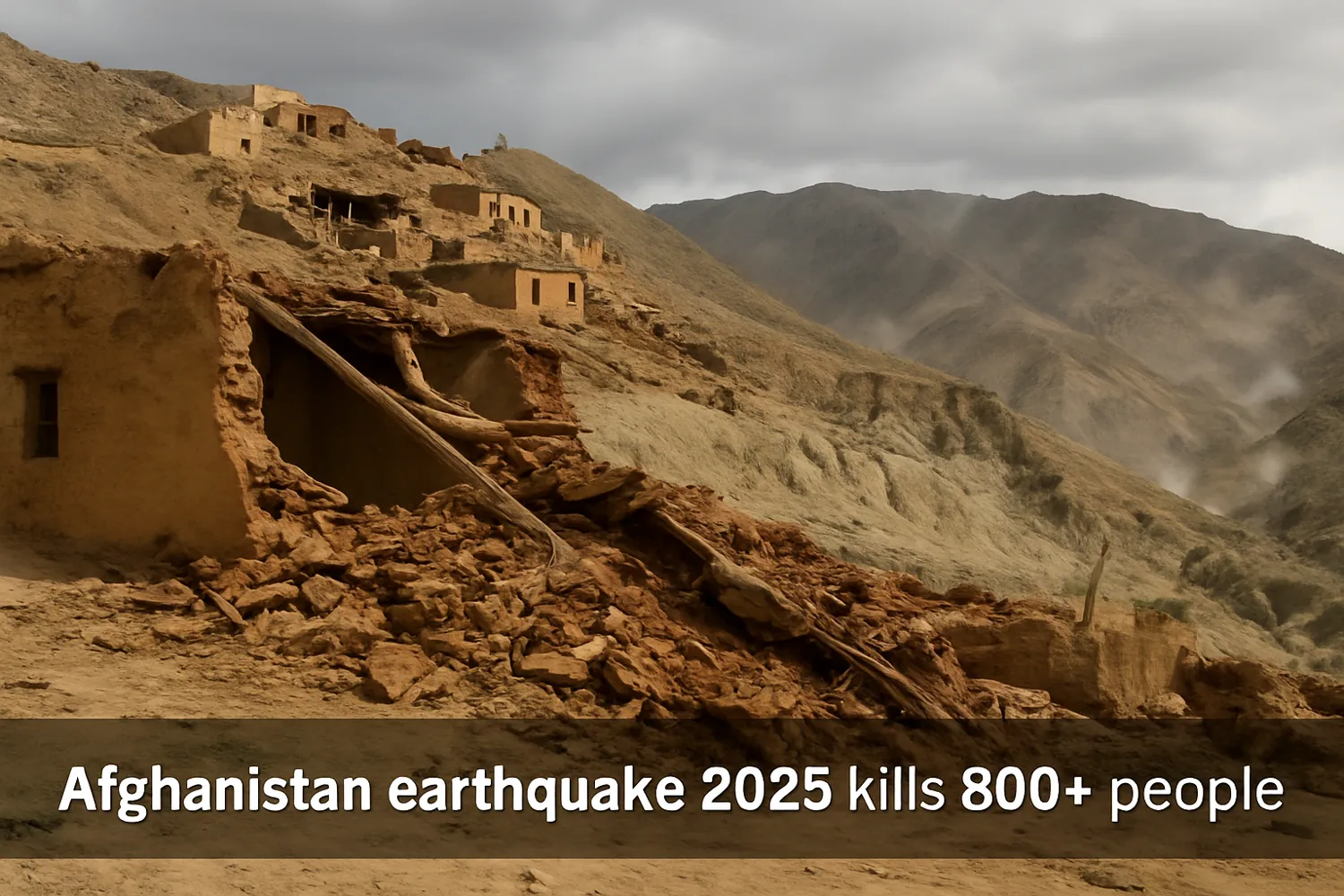
800+ dead — but no one’s rushing in
Afghanistan earthquake 2025 is the latest humanitarian catastrophe to shake a war-torn nation. Over 800 lives lost. Thousands injured. Entire villages flattened. And yet — barely a whisper from the West. No wall-to-wall coverage. No urgent international pledges. Just silence.
When did some lives become so dispensable that even their mass graves barely make headlines?
Context: A 6.8 quake hits eastern Afghanistan
On August 31, 2025, a devastating 6.8-magnitude earthquake struck Afghanistan’s eastern provinces — mainly Nangarhar and Kunar.
Initial reports by local authorities and aid organizations paint a dire picture:
- Death toll: Over 800 confirmed, expected to rise
- Injured: More than 2,800 people
- Destroyed: Dozens of rural villages, including essential clinics and schools
- Access: Roads and communication lines severed
The Taliban government issued an urgent call for international assistance — a rare move from an isolated regime. But the response? Tame, slow, and shameful.
Oppositional Argument: Western indifference is deliberate
Let’s be honest — if this quake had struck Italy, Japan, or even Chile, the G7 would be flying in C-130s within 24 hours. But Afghanistan? That’s “Taliban territory.” That’s “not our responsibility.”
Here’s the reality:
- The West is punishing civilians for the Taliban’s crimes.
- Humanitarian aid is being politicized — again.
- Media narratives reinforce apathy by reducing Afghan suffering to statistics.
It’s not neutrality. It’s negligence disguised as moral distance.
Analytical Breakdown: From occupation to abandonment
20 years of war — then what?
For two decades, the U.S., NATO, and their allies claimed to be “helping Afghanistan.” Building hospitals. Training forces. Establishing institutions. Then in 2021, they left overnight — abandoning not only people but responsibility.
Where is that moral obligation now?
Sanctions block relief
Most Afghan banks remain cut off from the global financial system due to Taliban-linked sanctions. That means:
- International NGOs can’t wire funds
- Equipment purchases are blocked
- Afghan-led relief efforts are starved of basic tools
Even aid groups like the Red Crescent are tangled in red tape, unable to respond at scale.
No trust, no action
The international community claims it “can’t trust the Taliban” — fair. But does that justify letting thousands die in rubble?
By refusing to separate people from politics, the West betrays the very values it claims to uphold.
Human Perspective: Voices from beneath the rubble
In a destroyed village near Jalalabad, a Red Crescent volunteer described digging out corpses of entire families. One survivor, a 10-year-old boy, had lost both parents and his three siblings. He was found holding his dead sister’s hand under crushed brick.
Local nurses treat wounds with cloth soaked in boiled saltwater. Pregnant women give birth in open fields. There are no antibiotics. No power. No water.
Afghans don’t need geopolitics. They need tents, trauma care, and food.
Counterarguments
“Helping Afghanistan empowers the Taliban.”
That’s a policy choice. Aid can be delivered through neutral NGOs and local civil groups. Blocking it punishes the innocent.
“The West has done enough.”
Then why did it leave a country so fragile that one quake kills hundreds?
“We don’t have the resources.”
The U.S. alone spends $800B annually on defense. A few cargo planes and mobile hospitals is not an overreach — it’s a moral minimum.
Conclusion: If you can’t save, at least show up
Afghanistan earthquake 2025 is more than a natural disaster — it’s a litmus test. Do human lives matter equally? Or only those in geopolitically convenient zones?
The silence of the so-called international community is damning. If the West can’t offer military intervention or political change, fine. But it can — and must — deliver water, food, and medicine.
Because in the end, the rubble isn’t just made of concrete. It’s built from decades of broken promises.