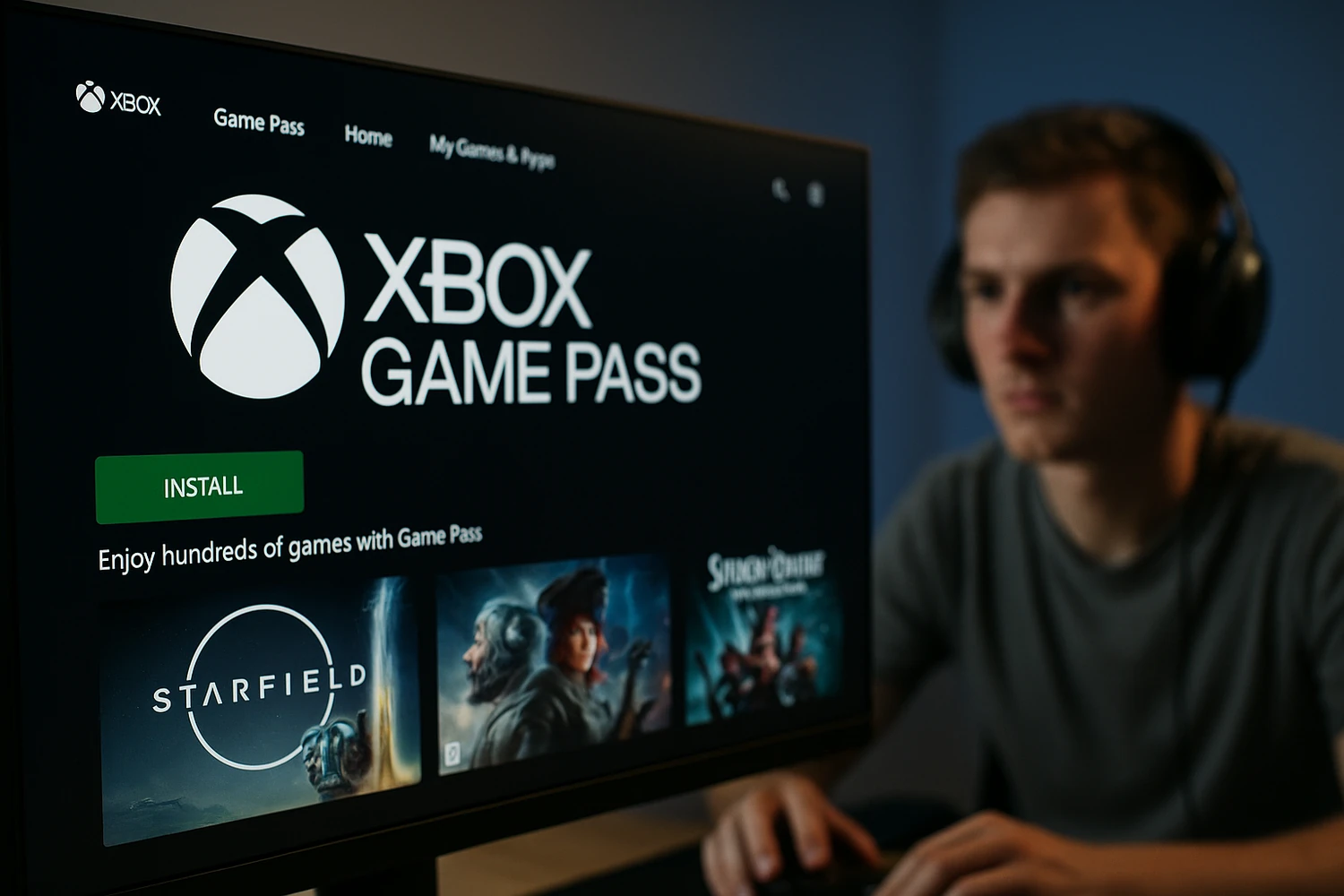
Microsoft Xbox Game Pass has suddenly become the most expensive subscription in gaming, jumping 50% overnight. Microsoft frames the move as inevitable—AI integration, premium features, and “future-proofing.” But let’s not kid ourselves. This is not just about “enhancements.” It’s a corporate cash grab riding the wave of AI euphoria, testing how far consumers can be squeezed. And it reveals how fragile the so-called gaming revolution really is.
Context: The mainstream narrative
The official story is simple. Microsoft says the Xbox Game Pass premium tier is now worth more because it bundles AI-driven features: smarter game recommendations, adaptive difficulty, even real-time strategy hints. In the same week, Rick Perry’s Fermi AI venture launched on Nasdaq at a dizzying $15 billion valuation. Analysts cheer this as proof that AI is the next frontier for entertainment and productivity.
Add to that Taiwan’s increasing pressure from Washington to host half of global chip production, and the picture looks clear: AI is driving everything—valuations, geopolitics, and now the very subscription you need to play games. The mainstream press largely buys this story, praising Microsoft’s “innovation” and presenting the hike as part of an unstoppable technological wave.
Oppositional Argument: Why the mainstream is wrong
But here’s the problem: Microsoft Xbox Game Pass isn’t rising because AI makes gaming better. It’s rising because Microsoft sees a cultural moment—an AI mania—and is cashing in. Players are not getting 50% more value. They are getting 50% more cost.
AI recommendations? These are glorified algorithms most platforms already provide. Adaptive difficulty? Gamers have had mods and settings for decades. The idea that AI suddenly makes these worth double the price is absurd. Microsoft is using the AI boom as cover for extracting more revenue from loyal customers while consolidating dominance.
Analytical Breakdown: Causes and consequences
The root cause lies in market dynamics. Game Pass was once the crown jewel of consumer-friendly gaming, undercutting traditional models. But after years of cheap growth, Microsoft hit a wall. Subscriber growth slowed. Regulators began scrutinizing its acquisitions. Investors demanded more profitability.
Enter AI. By branding Game Pass as an “AI-enhanced ecosystem,” Microsoft found its excuse. Never mind that actual improvements are marginal—what matters is optics. Investors see “AI integration,” Wall Street applauds, and the price hike looks like strategy instead of desperation.
The consequences are severe. First, it widens inequality in gaming. Casual players will drop off, leaving the service tilted toward wealthier audiences. Second, it sets precedent. If Microsoft can get away with a 50% increase, what stops Sony, Netflix, or Steam from following suit under the same AI pretext? Third, it fuels geopolitical risk: with Taiwan under pressure to churn out semiconductors for this boom, we risk tethering global security to corporate subscription models.
Human Perspective: The gamer’s reality
For ordinary players, this is not theory. It’s a monthly bill. Students who once celebrated Game Pass as the cheapest way to play now face a choice: cut back or quit. Families who justified the cost as “Netflix for games” see it eating into budgets already stretched by inflation.
Take Marcus, a college gamer in Ohio. He told me: “I used to brag about Game Pass. Now I feel priced out of the hobby I grew up with.” This isn’t an isolated voice. Reddit forums overflow with anger, petitions call for boycotts, and some players are pivoting back to second-hand discs. The “AI-powered future” doesn’t sound futuristic when it locks people out.
Counterarguments
Defenders argue the hike is temporary pain for long-term gain. They say AI will reduce development costs, speed up updates, and improve quality. But this logic is shaky. Developers themselves warn that AI tools often create more problems than they solve—introducing bugs, requiring human oversight, and even raising legal issues around copyright. Far from lowering costs, AI can increase them.
If AI really delivers efficiencies, why should consumers pay more upfront? Why not wait until those efficiencies manifest as cheaper production? The contradiction exposes the truth: AI is not about savings for players, but profits for corporations.
Conclusion: The hidden bill of AI hype
Microsoft Xbox Game Pass’s 50% hike is a warning shot. It shows how the AI boom—hailed as democratizing—can quickly turn into exclusionary economics. The gaming world is now a mirror of Wall Street: a frenzy of hype, with ordinary people footing the bill.
As the AI bubble inflates, we should ask: who really benefits? Microsoft’s shareholders or the players? If this is the future of entertainment, then the so-called AI revolution isn’t about empowerment—it’s about enclosure. And it deserves resistance, not applause.