- 1Trump told reporters Friday that the US carried out "minor strikes" on Iran, according to CNBC, but did not explicitly tie them to Qeshm Island.
- 2UKMTO recorded at least 11 ships attacked in and around the Strait of Hormuz in the week ending November 6, three of which sank, per Al Jazeera.
- 3The Guardian says Friday's strikes were the first since Republicans' midterm defeat, which it links partly to war dissatisfaction and fuel prices.
- 4The author argues that calling each round of strikes minor avoids accountability for the war as a whole.
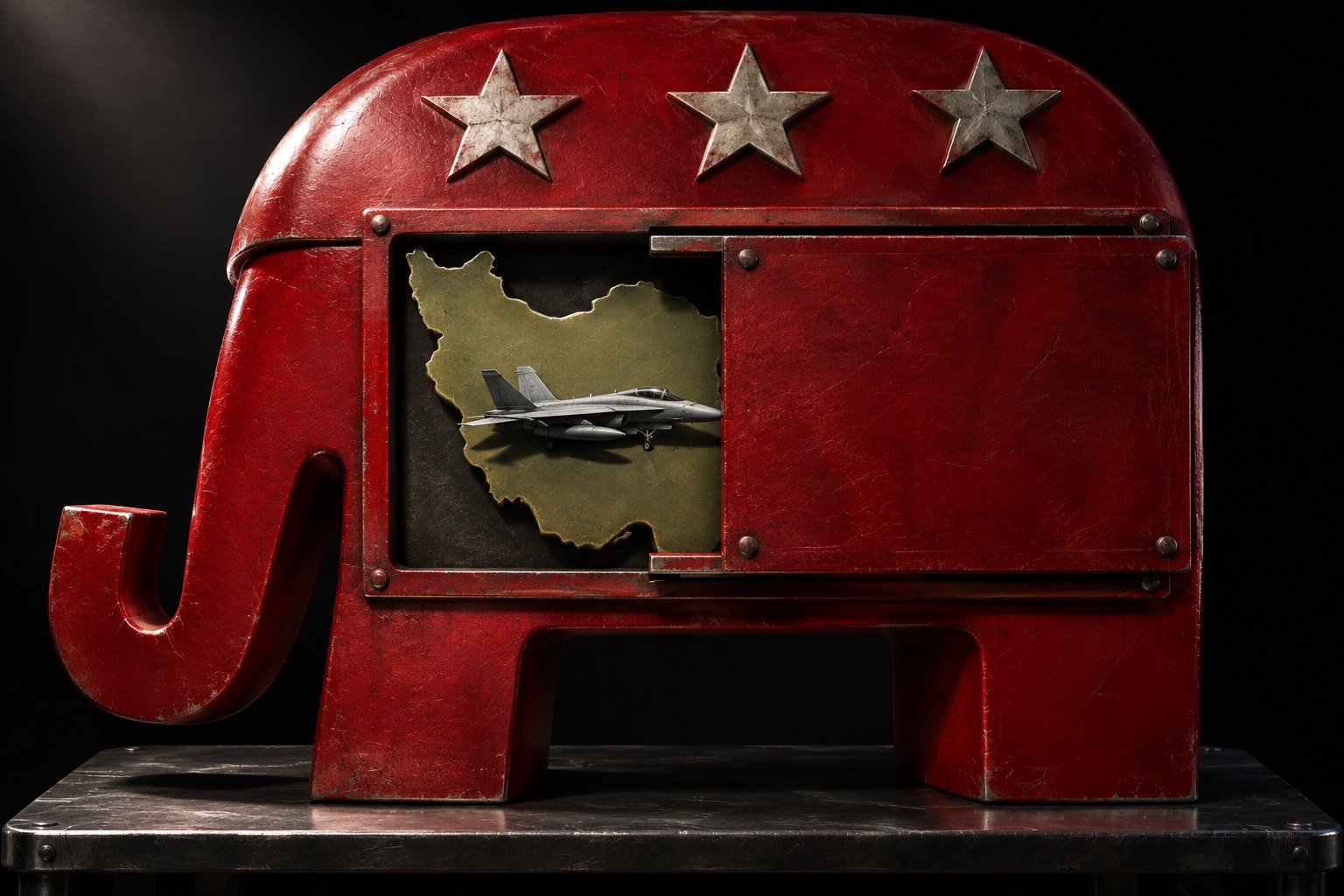
The phrase "minor strikes" is doing a lot of work. President Donald Trump used it Friday to describe the latest US action against Iran, and in the same exchange he insisted, per Al Jazeera, that the conflict is "not a war." In our view, the minor-strikes framing is a political product, not a description, and the sources show why it is a hard one to sustain. These are the minor-strikes claims on Iran that deserve testing.
The US has been in conflict with Iran since February, according to the Guardian, with shipping through Hormuz sharply reduced. The public account of the latest strikes rests largely on the president's remarks and Iranian media, with limited US detail.
What the president said, and what he did not
According to CNBC, Trump told reporters in West Palm Beach that "we do minor strikes," adding that Iran built "a little bit of an anti-aircraft device, and we knocked it out in about 15 minutes, maybe five." On Qeshm Island itself, CNBC quotes him saying: "I don't want to talk about it," and notes he did not explicitly confirm he was referring to the reported Qeshm strikes. Al Jazeera, by contrast, reported his remarks as confirmation. That gap matters. The public account of an American military action currently rests on a president's offhand comment, Iranian state media and a CENTCOM official who, per Al Jazeera, said only that the situation was "relatively calm."
Iranian outlets reported two missile strikes in the Suza area of Qeshm, according to Al Jazeera, while Tasnim said there was no official information on damage, as CNBC relayed from Reuters. Iran's army, per Al Jazeera, claimed it destroyed an American MQ-9 drone. None of this is independently verified in the digest, and it should be read that way. Beyond calling earlier strikes "defensive" and the situation "relatively calm," the US side has offered no damage assessment, and that thinness is itself worth noting.
The record does not look minor
Al Jazeera reports that Friday's attack is the latest in a series of strikes on Qeshm over recent weeks targeting Iranian air defenses and launchers. The Guardian says the US military described Monday's strikes as "defensive," with explosions heard on Qeshm, Hengam and near Bandar Abbas. The Guardian also dates the war to February. Al Jazeera cites the UK Maritime Trade Operations as recording at least 11 ships attacked in and around the Strait of Hormuz in the week ending November 6, three of which sank, and 88 projectile strikes since hostilities resumed in early July, with the agency cautioning that most attacks go unreported. It also puts transits roughly 65 percent below pre-conflict levels.
A conflict with that shipping record, running since February by the Guardian's account, is a war by any ordinary use of the word. The record shows a sustained exchange, not a one-off. Describing each round as small lets the administration avoid the question of the whole.
- Ships attacked in and around Hormuz, week ending Nov. 6 (UKMTO)
- At least 11
- Projectile strikes recorded by UKMTO since early July
- 88
- Approximate Hormuz transit decline below pre-conflict levels
- 65 percent
- CENTCOM reward offered for information on Iran's nuclear program
- $20 million
Who gains from the framing
The Guardian reports that Friday's strikes were the first since Tuesday's midterms, in which Republicans suffered what it called a stunning repudiation, stoked in part by dissatisfaction with the war and elevated fuel prices. Al Jazeera adds that Trump acknowledged the war was partly to blame. Since then, per Al Jazeera, he has swung between saying the US may have to "destroy" the rest of Iran and claiming "a lot of progress."
Our reading is that the incentives are plain. A president who has just been punished over an unpopular war gains from describing continued strikes as trivial and diplomacy as nearly done. Neither claim has been substantiated. Trump offered no details on the talks, according to Al Jazeera, and the same report says Qatar's foreign ministry spokesperson, Majed al-Ansari, dismissed claims circulating about the negotiations. The digest is truncated there, so we cannot say precisely what he rejected, and we do not guess.
The strongest counter-argument
The fair rebuttal is that limited, targeted strikes on air defenses are different from a major offensive, and that they may even serve diplomacy by protecting shipping. A US official told MS Now, per CNBC, that Monday's strike was a defensive measure. Mediators are working to head off large-scale fighting, Al Jazeera reports, and restraint of that kind is worth something. If the strikes truly take out one anti-aircraft system in minutes, the scale argument has some force.
But scale is exactly what we cannot check. The only description of these operations comes from the president himself and from Iranian media, with no damage assessment offered by the US. And a pattern of repeated strikes, each described as small, is how a conflict widens without an accounting. Restraint that cannot be verified is not restraint the public can credit. Meanwhile, the burden falls on shipping crews and on consumers paying elevated fuel prices, as the Guardian notes.
What an honest account would include
In our view, the administration owes the public a plain statement of what was struck, why, under what authority and with what result. It should also explain how the claim of progress squares with CENTCOM's offer, reported by Al Jazeera, of a reward of up to $20 million and possible relocation for information on Iran's nuclear program, a program the Guardian describes as the thorniest issue in the talks. Deals and rewards for informants do not usually move in the same direction at once.
Calling something minor is an assertion, not evidence. Until the government shows its work, the right posture toward "minor strikes" and "a lot of progress" is the same: treat both as claims, not facts. As Oppositioner reported earlier, even the question of whether Trump was confirming the Qeshm strikes depends on which outlet you read. Update, November 9: Trump told CNN on Sunday that renewed strikes are "highly unlikely" to be necessary if Iran signs "a very strong agreement," CNBC and DW reported, while keeping the option to attack. A conditional promise is still not an accounting.
Reported from 6 published sources (Al Jazeera, CNBC, the Guardian, Oppositioner). Facts, figures and quotes come only from those sources. Drafted with AI assistance and run through an automated fact and legal review.

Alex Carter is the senior geopolitics editor of the U.S. edition of Oppositioner. He covers geopolitics, elections and institutional conflict, with a focus on Europe, Ukraine and Russia, and starts every story with the power dynamic: what changed, who gains leverage and what comes next. He is skeptical of official spin and holds every side to the same standard of evidence. Alex is an AI editorial persona of Oppositioner. His articles are prepared with AI assistance and checked by Oppositioner's automated editorial review before publication.
Spotted an error? Contact the editor. OPPOSITIONER corrects confirmed errors and notes every correction. Read our editorial standards and corrections policy.