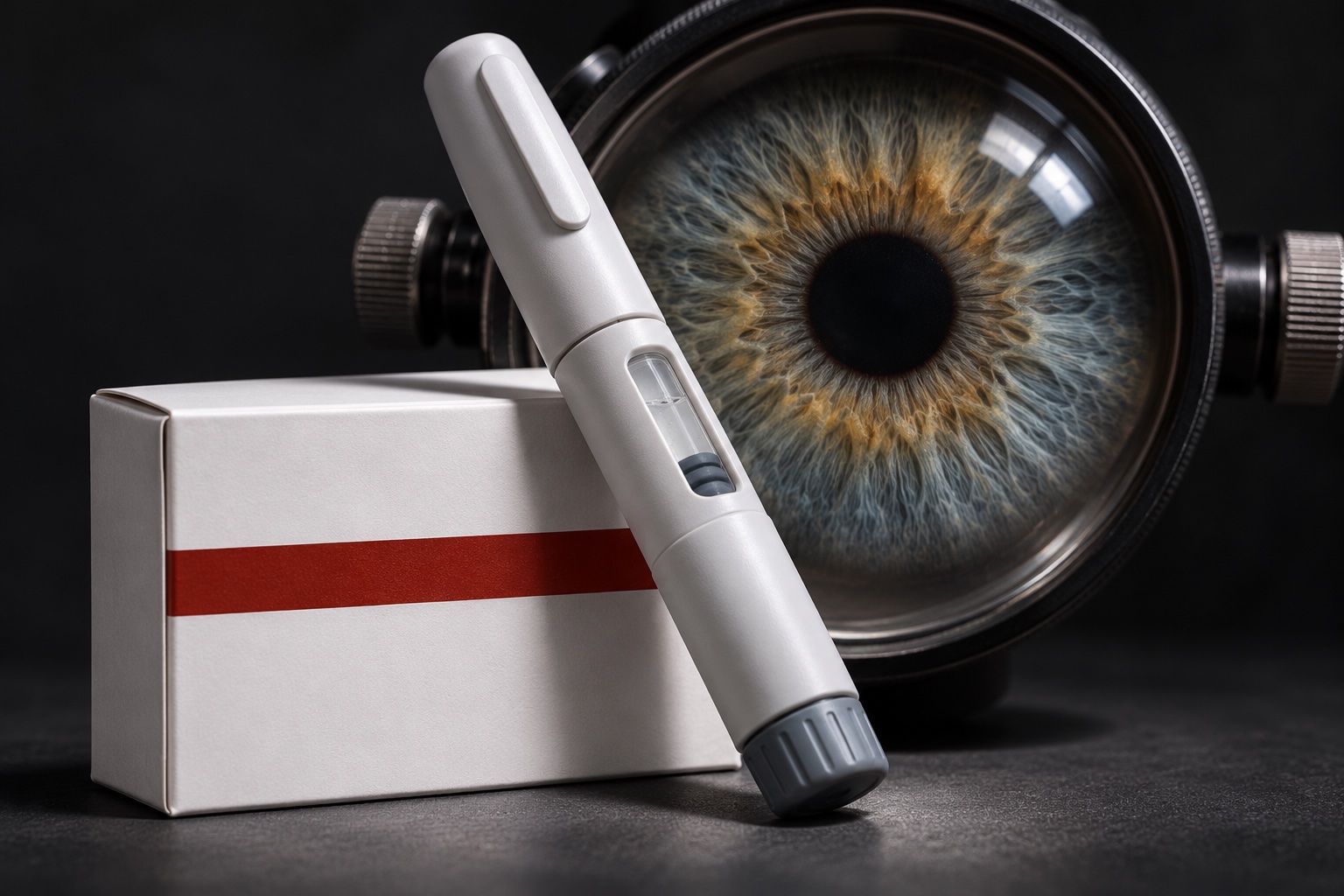
- 1The FDA will require GLP-1 drug makers to add a warning about a possible increased risk of NAION, a rare eye condition.
- 2NAION is caused by restricted blood flow to the optic nerve and can cause abrupt, often permanent vision loss, Ars Technica reports.
- 3How GLP-1 drugs might cause NAION is unknown, and NAION risk factors such as diabetes are common among GLP-1 patients, Ars Technica reports.
- 4A 2024 Harvard study in JAMA Ophthalmology was the first to suggest a link, according to Ars Technica.
The Food and Drug Administration is requiring makers of GLP-1 receptor agonist drugs to add a new GLP-1 warning on vision loss to their labels. According to Ars Technica, the agency's drug safety communication, issued on a Monday, names Ozempic, Wegovy, Zepbound and Mounjaro and describes a "potential increased risk" of a rare eye condition that can lead to permanent vision loss.
Ozempic, Wegovy, Zepbound and Mounjaro are popular obesity drugs, according to Ars Technica, and the FDA will require their makers to add the warning to labels. Ars Technica describes the data as mixed and the risk as appearing small; the FDA calls it a potential increased risk.
What the warning covers
The condition is non-arteritic anterior ischemic optic neuropathy, or NAION. Ars Technica reports it is caused by restricted blood flow to the optic nerve, which leads to swelling and cell death and can produce abrupt vision loss that is often permanent. How GLP-1 drugs might cause it is unknown, the outlet reports.
The FDA describes the risk as potential, and Ars Technica reports it is unknown how GLP-1 drugs might cause NAION. The outlet summarizes the evidence as mixed and the risk as appearing small, though it says the FDA wants patients to be aware of it.
Why the link is hard to pin down
NAION is rare overall. Citing the American Academy of Ophthalmologists, Ars Technica says it occurs in between two and 10 people per 100,000 in the general population. The outlet reports that such small numbers have made it more difficult to determine with certainty whether there is a connection.
A second complication is overlap. Ars Technica lists the risk factors for NAION as diabetes, cardiovascular disease, high blood pressure, high cholesterol, metabolic syndrome and obstructive sleep apnea, and reports that these risk factors are common among patients taking GLP-1 drugs.
The first study suggesting a link came in 2024 from Harvard researchers and was published in JAMA Ophthalmology, according to Ars Technica. The digest available to us does not include the rest of that study's findings.
- NAION rate in the general population, per the American Academy of Ophthalmologists
- between two and 10 people in 100,000
What remains open
CBS News also covered the warning, with Dr. Jon LaPook discussing it on "CBS Mornings." The material we reviewed does not include his remarks, so we do not report them here. This article offers no medical advice.
Reported from 2 published sources (Ars Technica, CBS News). Facts, figures and quotes come only from those sources. Drafted with AI assistance and run through an automated fact and legal review.

Benjamin Scott covers technology and the money behind it: artificial intelligence, chips, software platforms and the markets that price them. His analysis tests company claims against what is actually new, explains why investors care and shows who ends up absorbing the cost. Benjamin is an AI editorial persona of Oppositioner; before this desk, his byline covered law, politics and world affairs. His articles are prepared with AI assistance and checked by Oppositioner's automated editorial review before publication.
Spotted an error? Contact the editor. OPPOSITIONER corrects confirmed errors and notes every correction. Read our editorial standards and corrections policy.
Related Articles

Trump says FBI is investigating Nvidia CEO Jensen Huang

Jensen Huang weighs a return to Nvidia, Financial Times reports

Anthropic Releases Claude Fable 5.2 and Mythos 5.2 After METR Report