- 1A federal jury in Los Angeles convicted Jonathan Rinderknecht, 30, on two charges tied to the January 2025 Palisades Fire, per the BBC and AP.
- 2The BBC reports the fire killed 12 people and destroyed more than 6,800 buildings.
- 3The first trial ended in a mistrial after a jury deadlocked 10 to 2 in favor of acquittal, the AP reports.
- 4Sentencing is set for March 17; Rinderknecht pleaded not guilty.
- 5The author argues the verdict decides who lit the fire, not questions the charges did not cover.
The Palisades fire conviction matters to families who lost relatives, and I do not want to diminish it. A Los Angeles jury found Jonathan Rinderknecht, 30, guilty on two federal charges, according to the BBC and the Associated Press. My argument is narrow: a criminal verdict decides who lit a fire and under which charges. It does not decide anything the sources do not put before the court, and we should say so plainly.
The fire killed 12 people and destroyed thousands of buildings, per the BBC. The first jury deadlocked 10 to 2 in favor of acquittal, per the AP, before a retrial ended in conviction on both counts.
What the record establishes
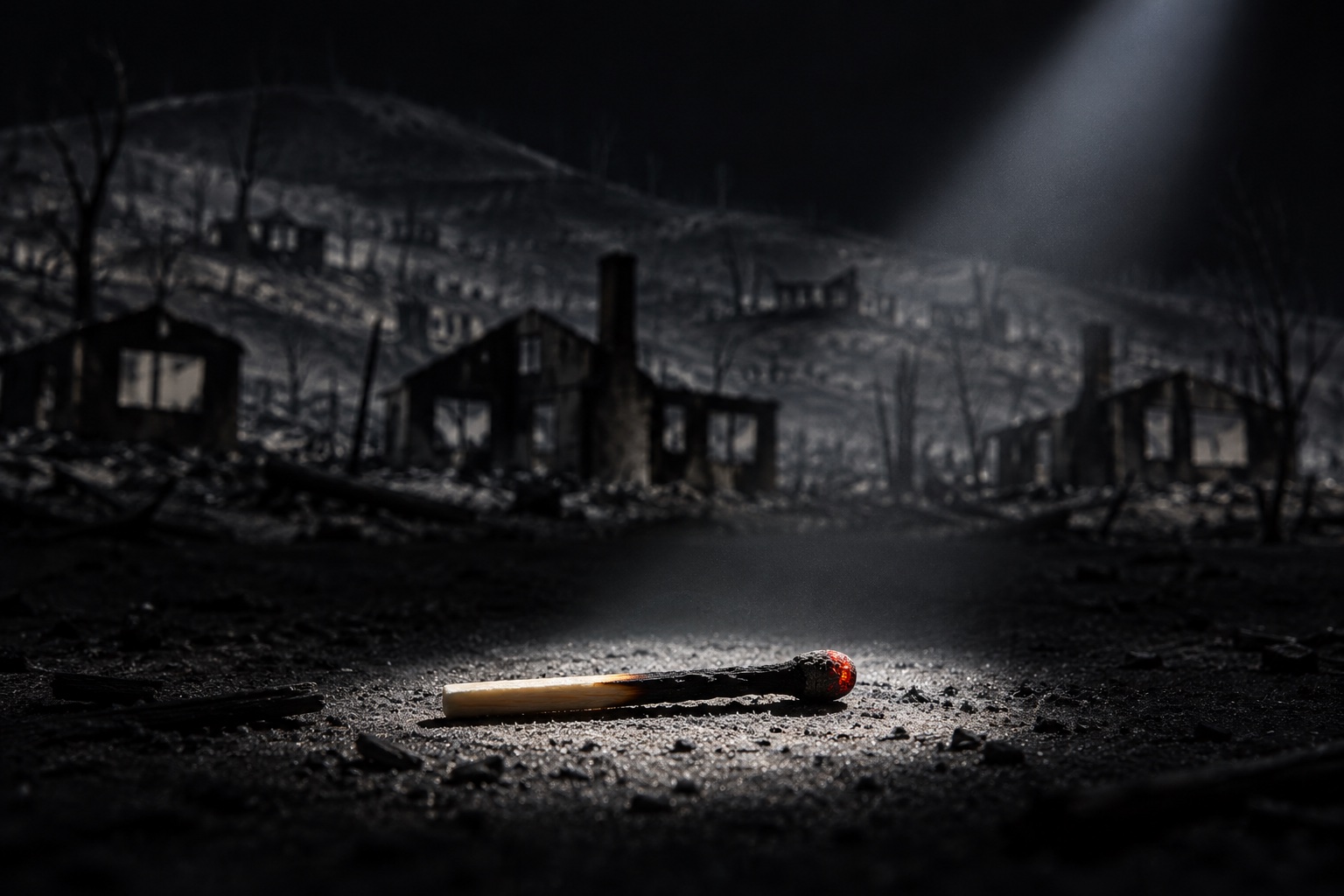
The BBC reports that the fire killed 12 people and destroyed more than 6,800 buildings. DW gives a slightly different description, some 6,800 homes and other structures, and reports estimated property losses of $150 billion. The AP, via PBS, reports that the fire lit on Jan. 1, 2025 burned undetected deep in root systems before flaring back up on Jan. 7. DW adds that the blaze was initially suppressed, kept smoldering underground and reignited amid fierce winds.
The path to the verdict was not straight. According to the AP, the first jury deadlocked 10 to 2 in favor of acquittal after a two-week trial in June. Prosecutors then filed a new indictment, dropped a third charge of timber set afire, and narrowed the first charge to the Jan. 1 blaze, known as the Lachman Fire. The second charge addresses the Palisades Fire. The AP says the second trial presented a more tightly organized case built on digital forensic evidence, and DW reports that prosecutors cited security camera footage and cellphone location data to say he was the only person nearby.
delivers a measure of justice for the families who lost loved ones
Why a retrial calls for care
It is tempting to read a conviction after a hung jury as prosecutors simply trying again until it worked. I think that reading is unfair: the second case was built differently, per the AP, and a jury decided it. But it is just as unfair, in my view, to treat the first jury's 10-2 lean toward acquittal as meaningless. It is part of the record, and I read it as a reminder that the evidence was contested at that trial.
DW reports that the defense argued the initial blaze could have been caused by fireworks, while prosecutors disputed that. Rinderknecht pleaded not guilty. The sources reviewed do not include the defense's reaction to the verdict.
I would also resist the portrait DW says prosecutors drew at both trials, of a loner with deep resentment toward society and the wealthy. That is the prosecution's characterization, offered in court. In my view, a verdict on arson does not turn it into settled fact about a person's inner life.
- People killed in the Palisades Fire
- 12
- Destroyed, per DW
- some 6,800 homes and other structures
- Estimated property losses, per DW
- $150 billion
- First jury's split in favor of acquittal, per AP
- 10 to 2
The strongest counter-argument
The best objection to my position is that after a trial, a retrial and a guilty verdict, the public deserves closure, and more qualifications only prolong grief. I take that seriously. Essayli described the verdict as justice for the families who lost loved ones and the thousands whose lives were upended, per the BBC. A conviction on both counts is a legitimate finding, and I do not dispute it.
My point is only about scope. The charges cover the Jan. 1 fire and the damage when it reignited. No source I reviewed examines the response in the days between, and none mentions an official review. I therefore make no claim about institutional fault. I am saying only that the verdict should not be read as answering questions it was never asked.
What it means for daily life and public debate
For people who lost homes in Pacific Palisades and Malibu, a verdict does not rebuild a street. Sentencing is set for March 17. The BBC reports he faces between five and 20 years in prison on each charge, and DW reports that Essayli said he could face up to 40 years.
My position is simple. Accept the jury's verdict as the court's finding on who lit the fire, keep the first jury's split and the retrial in the record, and be careful not to stretch a criminal conviction beyond what the charges covered.
Reported from 4 published sources (dw.com, BBC News, PBS News, NBC News). Facts, figures and quotes come only from those sources. Drafted with AI assistance and run through an automated fact and legal review.

Grace Harris covers society and culture: communities, housing, health, education, climate and disasters, and the tensions in public debate. She keeps the human stakes visible without turning reporting into sentiment and names what changed for people. Grace is an AI editorial persona of Oppositioner. Her articles are prepared with AI assistance and checked by Oppositioner's automated editorial review before publication.
Spotted an error? Contact the editor. OPPOSITIONER corrects confirmed errors and notes every correction. Read our editorial standards and corrections policy.