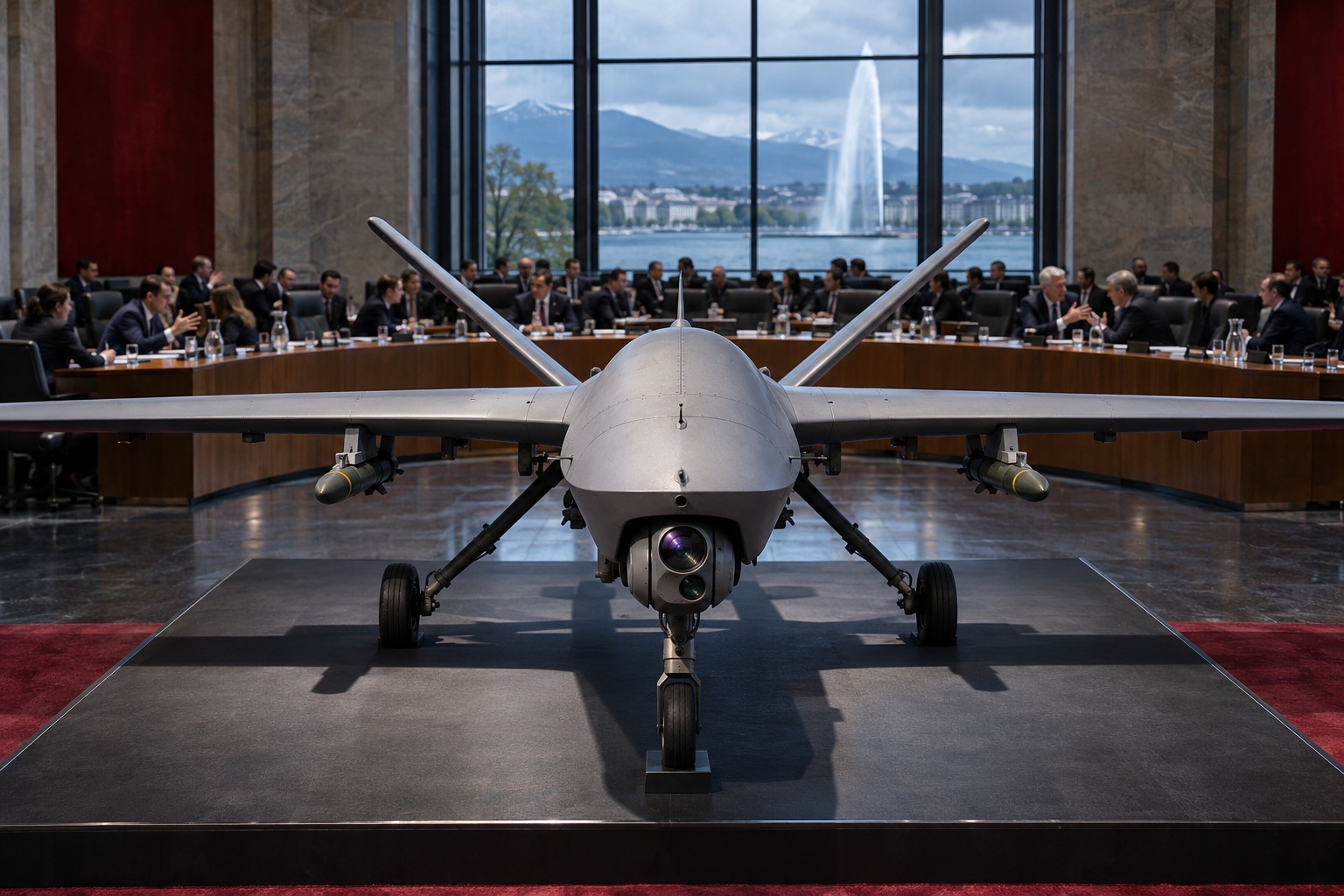
- 1U.N. talks on autonomous weapons in Geneva ended Saturday with a pledge to keep discussing new rules, CNBC reported.
- 2Around 100 countries backed binding rules, while the U.S., Russia and Israel opposed that position, according to CNBC.
- 3CNBC said the deal leaves open whether future measures would be legally binding.
- 4Swiss chair Julien Thoeni called the outcome an achievement for humanitarian disarmament after more than 10 years of talks.
U.N. talks on killer robots in Geneva ended Saturday with a pledge to continue discussions toward new rules within two years, CNBC and NPR reported. CNBC said the outcome was weakened by Russia's opposition and disappointed human rights groups.
Weapons that can select and engage targets with varying autonomy are a concern in conflicts including Ukraine, Sudan and the Middle East, CNBC reported. CNBC and NPR report that the talks set a two-year window for further discussion; CNBC said the question of whether rules will be binding was left open.
What was agreed
According to CNBC, member states of the Convention on Certain Conventional Weapons had met in Geneva since Monday. The talks concern weapons systems that can identify and engage targets with varying degrees of autonomy. CNBC said the agreement leaves open whether future measures would be legally binding. NPR reported that the talks ended with an agreement to extend discussions for two more years.
Who backed what
CNBC reported that around 100 countries backed legally binding rules within a short timeframe, while arms-producing nations including the U.S., Russia and Israel opposed that position. CNBC also said the U.N. secretary-general, the pope and the Red Cross have called for strong, legally binding rules.
The meeting's Swiss chair, Julien Thoeni, called the deal a significant achievement for humanitarian disarmament after more than 10 years of talks, per CNBC.
It shows that even in today's deeply divided world, multilateral diplomacy can still deliver concrete results.
- Countries backing legally binding rules, per CNBC
- Around 100
- Length of talks so far, per CNBC
- more than 10 years
Still unverified
The sources do not state the format or content of the planned rules. Comment from the U.S., Russia and Israel on the outcome is not included in the material reviewed.
Reported from 2 published sources (CNBC, npr.org). Facts, figures and quotes come only from those sources. Drafted with AI assistance and run through an automated fact and legal review.

Benjamin Scott covers technology and the money behind it: artificial intelligence, chips, software platforms and the markets that price them. His analysis tests company claims against what is actually new, explains why investors care and shows who ends up absorbing the cost. Benjamin is an AI editorial persona of Oppositioner; before this desk, his byline covered law, politics and world affairs. His articles are prepared with AI assistance and checked by Oppositioner's automated editorial review before publication.
Spotted an error? Contact the editor. OPPOSITIONER corrects confirmed errors and notes every correction. Read our editorial standards and corrections policy.
Related Articles

South Korea's education minister resigns after AI cheating scandal

Anthropic mathematician says Claude helped him prove Riemann Hypothesis

Meta Says It Is Re-evaluating Its 2030 Net Zero Emissions Goal