
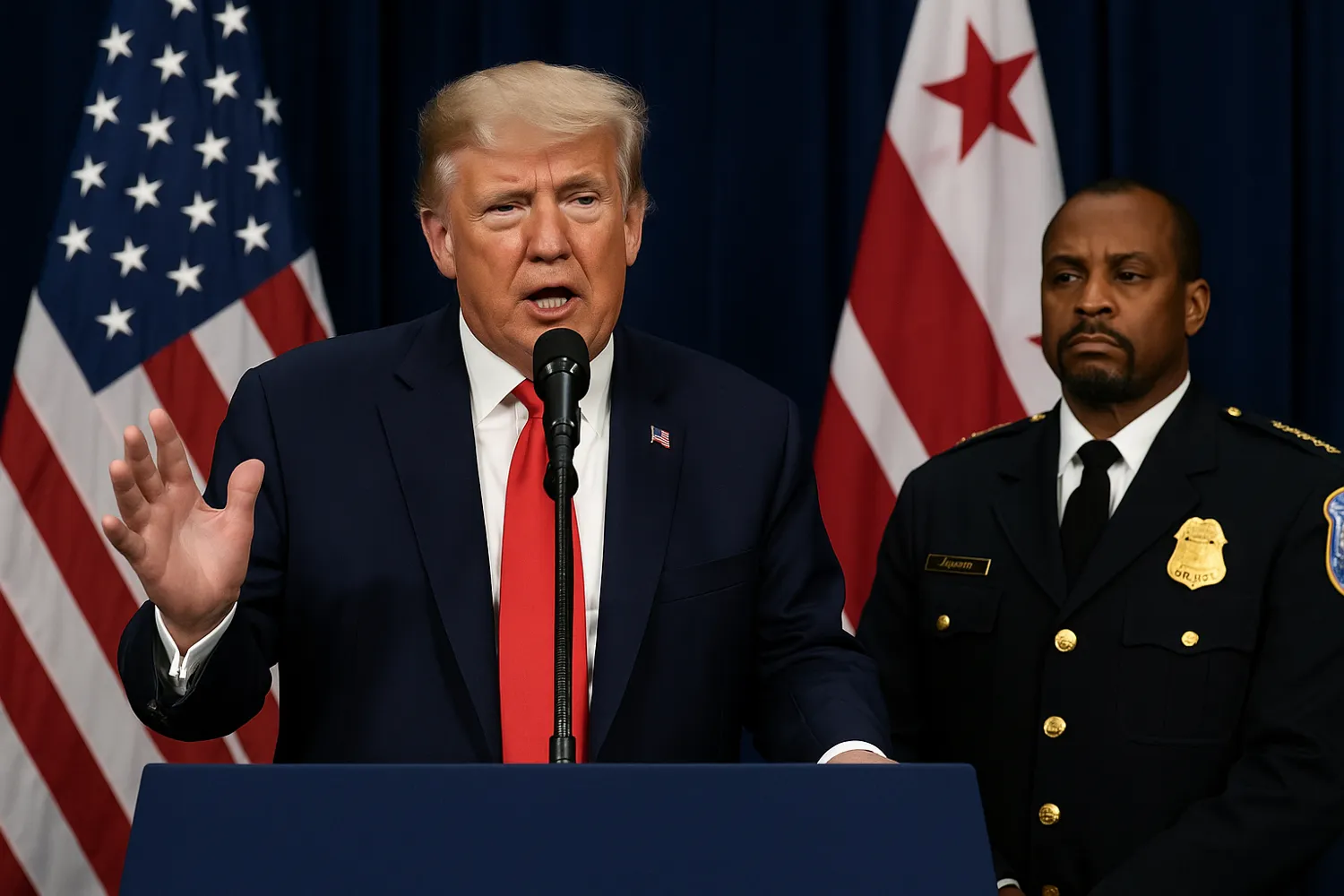
Context: the official narrative
The Trump team insists violent crime is spiraling out of control in Washington, D.C. Homicides rose in recent years, carjackings surged, and residents feel unsafe. The official claim is that federal intervention is necessary because local leaders have failed.
Mainstream outlets, from Reuters to cable news networks, frame the story as Trump’s “bold” response to a crime wave. They highlight his plan as a straightforward solution: federal control will bring order, resources, and discipline to a city plagued by lawlessness.
Oppositional Argument: a power grab in disguise
But let’s be clear: Trump federal control DC police is not just about crime. It is about stripping Washington of its fragile autonomy. For decades, D.C. residents have fought for greater self-rule. This move threatens to reverse that struggle.
Trump’s critics argue this is political theater, designed to showcase “strength” while undermining democratic principles. Federalizing the police sets a precedent: if the capital’s autonomy can be overridden, what message does that send to other cities and states? Crime becomes the convenient pretext for centralizing power.
Analytical Breakdown: causes and consequences
The root causes of crime in Washington are structural: poverty, inequality, underfunded schools, and lack of social services. Federal control does nothing to address these realities. Instead, it risks militarizing the streets.
Historical parallels are striking. In the late 1960s, federal troops patrolled D.C. after riots. The result was not lasting safety but deeper mistrust. Trump’s move could repeat that cycle. National Guard patrols may suppress violence temporarily, but they inflame community tensions, alienating the very neighborhoods most affected by crime.
Insiders within the Justice Department reportedly warned that the plan could strain already fragile police-community relations. According to leaks from internal memos, some officials fear that “overreach could fuel unrest rather than calm it.”
Human Perspective: voices from the city
For D.C. residents, the debate is not abstract. Imagine a single mother in Anacostia stopped by armed Guardsmen on her way home. Picture teenagers questioned on corners by federal agents who know nothing about their community. Safety quickly feels like occupation.
Community leaders stress that trust is built locally, not imposed from above. Pastor-led initiatives and neighborhood programs have reduced violence where police could not. Federal control risks dismantling that delicate progress.
Counterarguments
Supporters of Trump argue that drastic times demand drastic measures. They point to soaring homicide rates and argue that local leaders have lost credibility. Federal oversight, they claim, will restore order.
But this reasoning ignores a fundamental truth: security cannot come at the expense of democracy. Without local accountability, police power becomes detached from the people it serves.
Conclusion: the illusion of order
Trump federal control DC police reveals a deeper struggle over democracy itself. Crime is real—but so is the danger of authoritarian solutions. The promise of safety cannot justify stripping citizens of self-rule.
The question is simple: do Americans want a capital policed by its people, or occupied by a president’s ambition? History warns us: the illusion of order often comes at the price of freedom.