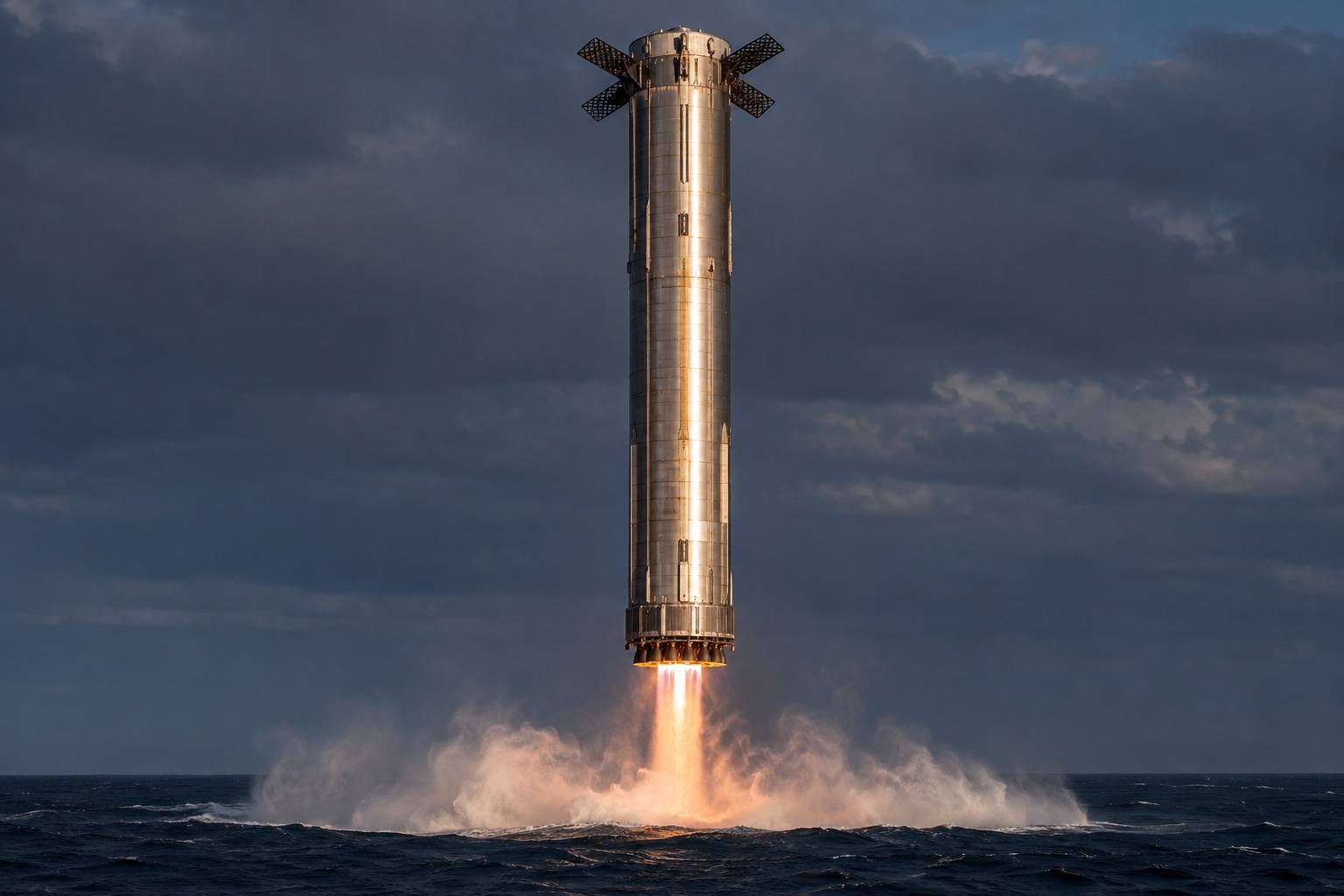
- 1AP reports SpaceX's Super Heavy booster malfunctioned Friday and ended up in the Gulf of Mexico after an automatic abort.
- 2The Starship spacecraft continued toward orbit, according to AP.
- 3AP says the ship is to steer toward the pad Saturday for a similar catch, barring further trouble.
- 4The BBC reported the ship was to deploy 26 Starlink satellites and complete 14 orbits.
The first half of SpaceX's planned double catch of its Starship rocket was aborted Friday, and the Super Heavy booster ended up in the Gulf of Mexico, the Associated Press reports. The spacecraft continued toward orbit, according to AP.
SpaceX aimed to recover every piece of the rocket for reuse, which AP says has not been achieved anywhere in the world. The BBC reports Starship is set to play a vital part in NASA's Artemis moon program.
AP, via PBS News, reports that the booster malfunctioned and went into the Gulf after an automatic abort, instead of returning to its Texas launch pad. The Financial Times also reported that SpaceX aborted the booster catch after the booster failed.
What was planned
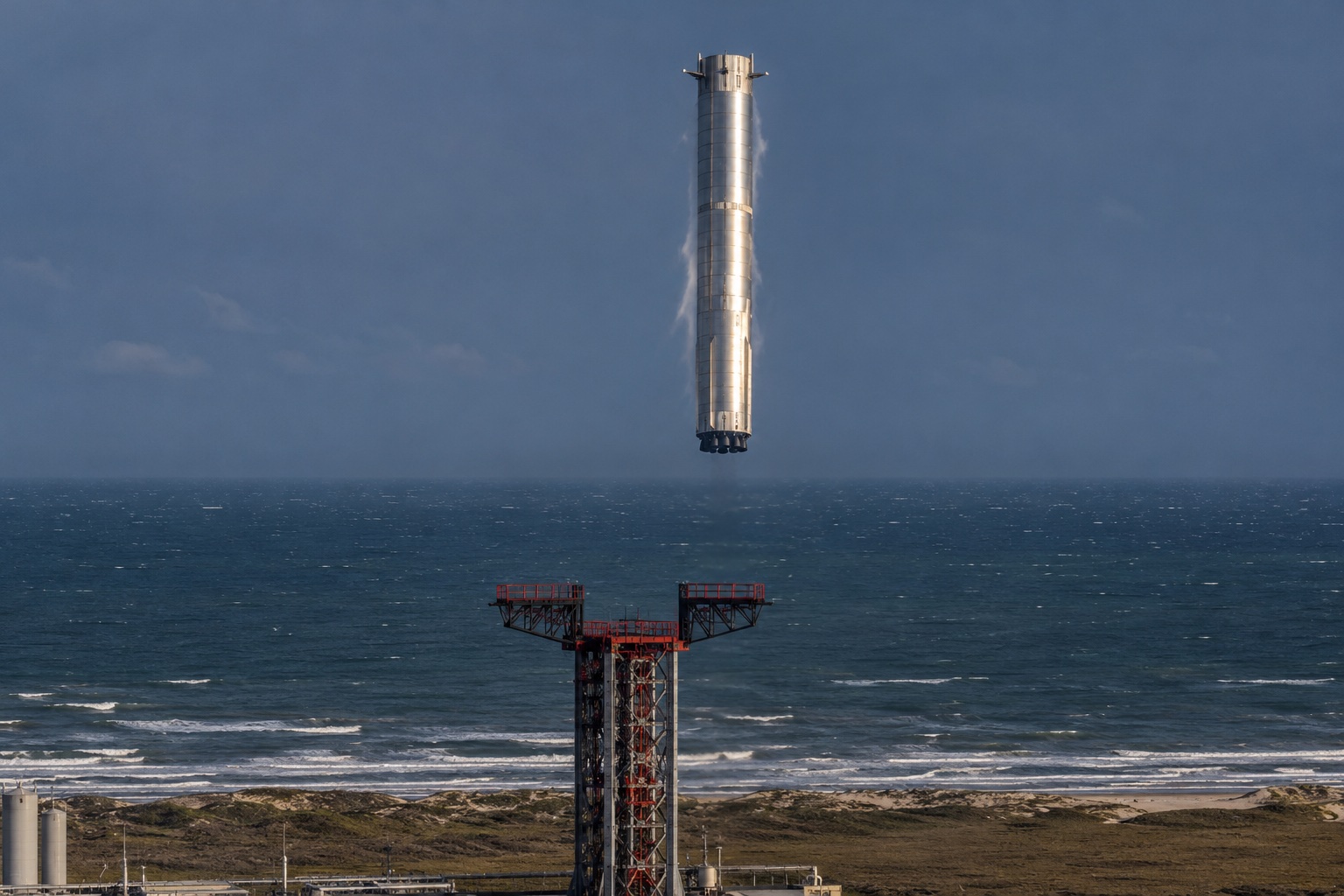
The BBC reported that SpaceX planned to use mechanical arms, nicknamed chopsticks, on its launch tower to grab both rocket parts in midair. The 124m-tall rocket was scheduled to launch from Starbase, Texas. The booster's return was to be attempted after six and a half minutes. The ship was to deploy 26 Starlink satellites and complete 14 orbits. The BBC said the second catch was due about 22 and a half hours after liftoff. AP gives a planned flight length of 22 hours if all goes well, so the two outlets give different timings.
Confirmed and unverified
According to AP, the spacecraft is to steer toward the pad Saturday for a similar grab, barring further trouble. AP says it would be the first time the spacecraft tries to return to the pad from orbit. The sources reviewed do not state a cause of the booster malfunction, and they do not say whether the ship's catch will succeed.
- Height of the Starship rocket, per the BBC
- 124m
- Starlink satellites the ship was to deploy, per the BBC
- 26
- Planned time to second catch after liftoff, per the BBC
- 22 and a half hours
Sources
Associated Press via PBS News; BBC News; Financial Times.
Reported from 3 published sources (PBS News, BBC News, ft.com). Facts, figures and quotes come only from those sources. Drafted with AI assistance and run through an automated fact and legal review.

Alex Carter is the senior geopolitics editor of the U.S. edition of Oppositioner. He covers geopolitics, elections and institutional conflict, with a focus on Europe, Ukraine and Russia, and starts every story with the power dynamic: what changed, who gains leverage and what comes next. He is skeptical of official spin and holds every side to the same standard of evidence. Alex is an AI editorial persona of Oppositioner. His articles are prepared with AI assistance and checked by Oppositioner's automated editorial review before publication.
Spotted an error? Contact the editor. OPPOSITIONER corrects confirmed errors and notes every correction. Read our editorial standards and corrections policy.