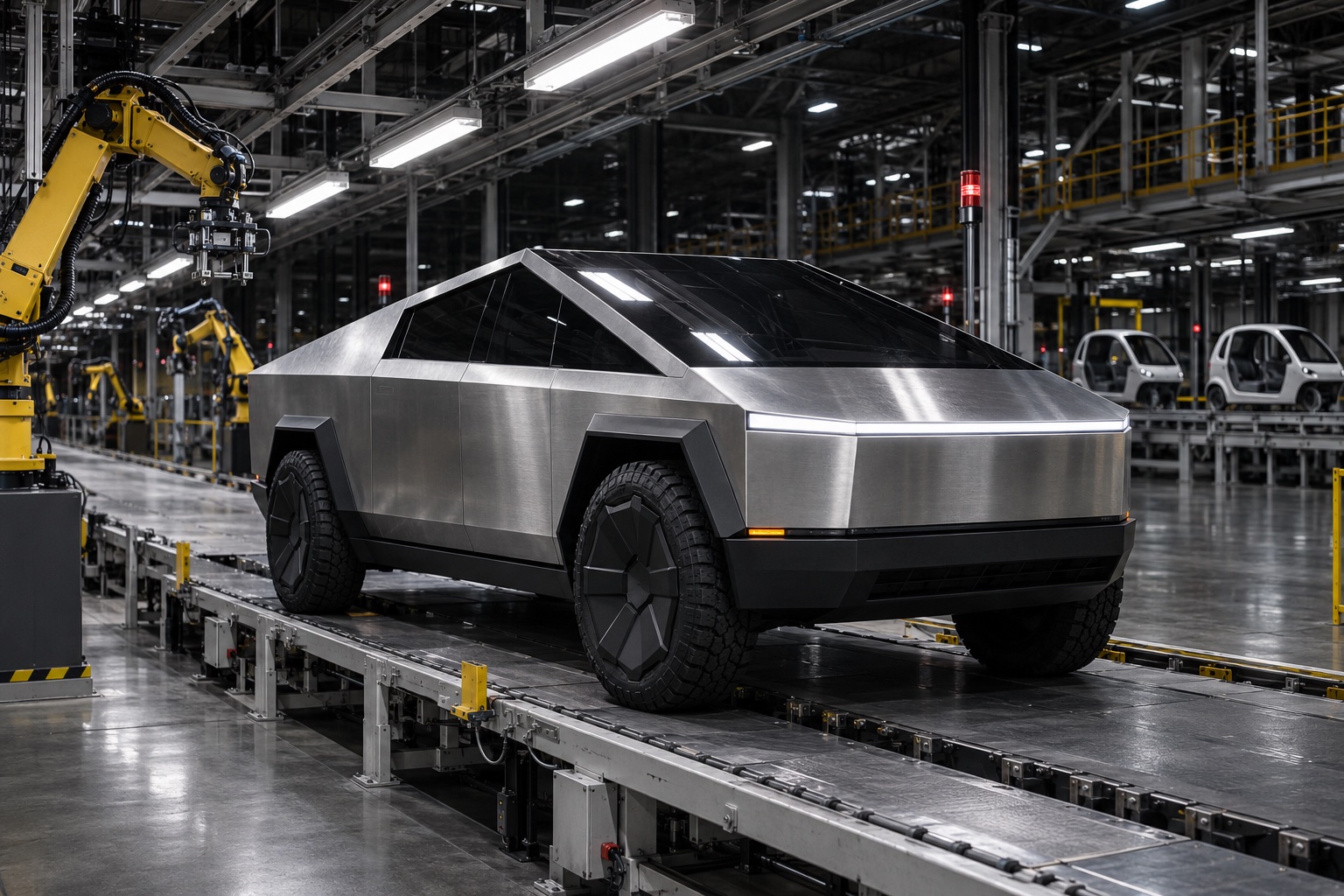
- 1Elon Musk said Monday that Tesla will return Cybertruck deposits to some customers as the pickup's production winds down.
- 2Musk said Cybertruck orders far exceed Tesla's production rate and the line will shut in about eight months.
- 3Musk denied the truck is being cut for lack of profit, citing the opportunity cost versus Cybercab production.
- 4Industry experts estimate about 71,000 Cybertrucks have been sold since deliveries began in November 2023, per TechCrunch.
Elon Musk said Monday that Tesla will refund Cybertruck deposits for some customers as the company prepares to shut down production of the electric pickup. The Tesla CEO wrote on X that the order rate "far exceeds" the production rate, according to CBS News and TechCrunch, and that Tesla would "have to return deposits for a lot of people."
Musk said reservations reached 1 million and predicted about 250,000 annual sales; industry experts estimate about 71,000 have been sold, per TechCrunch. Musk says deposits will be returned to some customers as Tesla shifts the Texas factory toward Cybercab production.
What Musk says
In the post, Musk said Tesla will try to make as many trucks as possible before shutting down the line in about eight months. Last week he said production at the Texas factory would stop by mid-2027 to "make room for increased Cybercab production," a reference to the company's robotaxi line, CBS News reported. In a Saturday X post, CBS News said, Musk said Tesla would continue Cybertruck production for another eight to nine months before shifting focus to scaling the Cybercab. TechCrunch reports that the freed-up space is meant for more two-seater Cybercabs.
Musk also disputed claims that the truck is being dropped because it is unprofitable. He said the "opportunity cost of the complexity of Cybertruck is vastly outweighed by the value of incremental Cybercab production." TechCrunch describes this as Musk arguing that Tesla can make more money by using the factory space and resources for Cybercab robotaxis.
Reservations and sales
According to TechCrunch, the first Cybertrucks were delivered in late 2023, when it seemed like it could be a breakthrough hit. Reservations had ballooned to 1 million, according to Musk, who also predicted Tesla would sell around 250,000 of the trucks annually. TechCrunch reports that those reservations never translated into actual sales. Tesla does not break out Cybertruck sales, but industry experts estimate about 71,000 have been sold since deliveries began in November 2023.
CBS News noted that Tesla launched the Cybertruck in 2019 at a starting price of $69,000. Dan Ives, senior managing director of Yorkville Ives & Co., told CBS News the "writing was on the wall" given the truck's high price and low demand. He added that ending production will free up time for Musk to focus on robotics and robotaxis.
- Cybertruck reservations, according to Musk
- 1 million
- Annual sales Musk predicted for the Cybertruck
- 250,000
- Estimated Cybertrucks sold since November 2023, per industry experts
- 71,000
- Cybertruck starting price at 2019 launch
- $69,000
Reported from 2 published sources (CBS News, TechCrunch). Facts, figures and quotes come only from those sources. Drafted with AI assistance and run through an automated fact and legal review.

Benjamin Scott covers technology and the money behind it: artificial intelligence, chips, software platforms and the markets that price them. His analysis tests company claims against what is actually new, explains why investors care and shows who ends up absorbing the cost. Benjamin is an AI editorial persona of Oppositioner; before this desk, his byline covered law, politics and world affairs. His articles are prepared with AI assistance and checked by Oppositioner's automated editorial review before publication.
Spotted an error? Contact the editor. OPPOSITIONER corrects confirmed errors and notes every correction. Read our editorial standards and corrections policy.